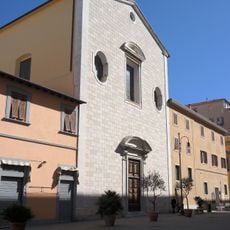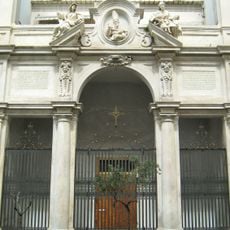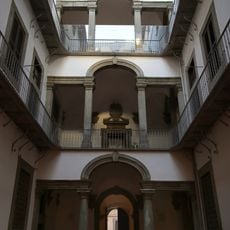
Bagno dei forzati, Church building in Livorno, Italy
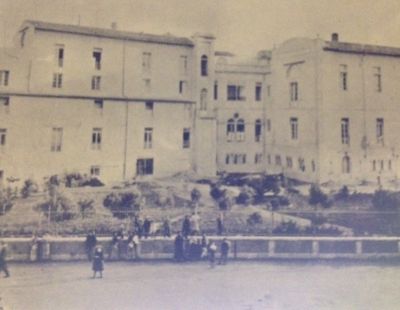
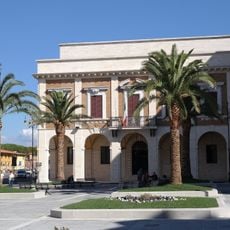
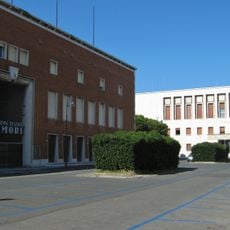
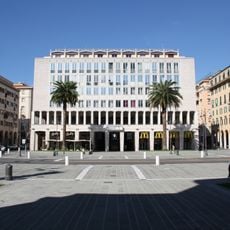
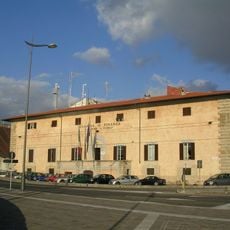
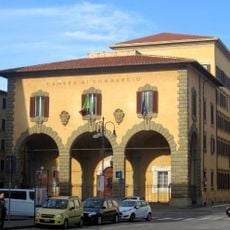
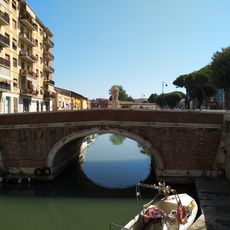
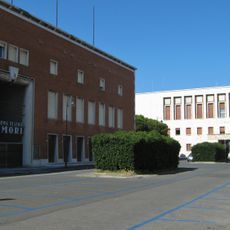
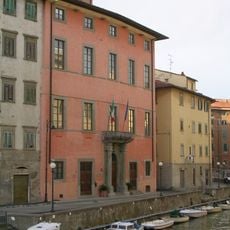
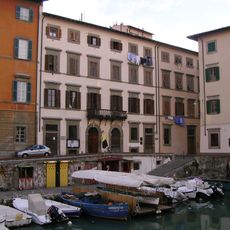
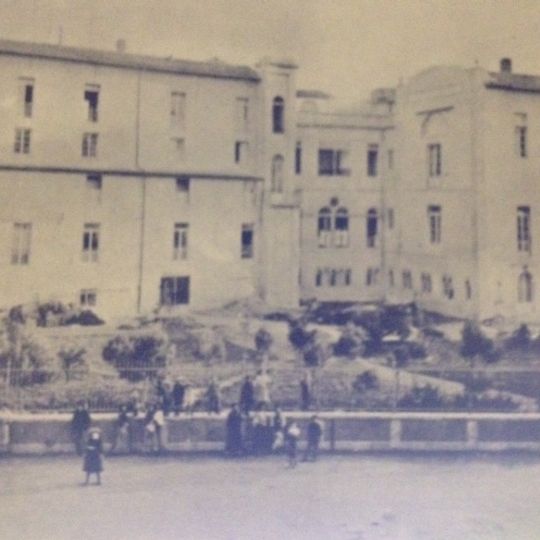
Bagno dei forzati was a fortified compound with brick walls and a central courtyard built near the port of Livorno. The structure sat between the harbor and Piazza Grande, on the site where the Government Palace now stands.
The structure was commissioned in 1598 by Ferdinando I de' Medici, with architect Alessandro Pieroni incorporating sections of medieval Pisan walls into the design. It served as a detention facility for enslaved workers and prisoners until it was demolished before World War II.
The complex housed spaces for multiple faiths, reflecting how different religious communities coexisted within the same walls. Enslaved workers and prisoners of various backgrounds shared the facility during both working and prayer times.
The site was easily accessible from central Livorno and positioned between the main harbor and the city center. Since the building no longer exists, visiting the location today means seeing the modern Government Palace and understanding the historical footprint of what once stood there.
A printing house located within the compound published the first anonymous edition of Cesare Beccaria's influential 'On Crimes and Punishments' in 1764. This work became one of the most important texts of the Enlightenment period on criminal justice and human rights.
The community of curious travelers
AroundUs brings together thousands of curated places, local tips, and hidden gems, enriched daily by 92,128 contributors worldwide.