Basilica Pontificia di Santa Maria de Gulia, Minor basilica in Castellabate, Italy
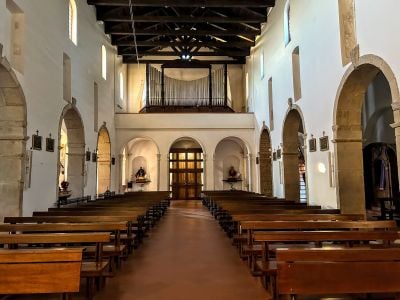
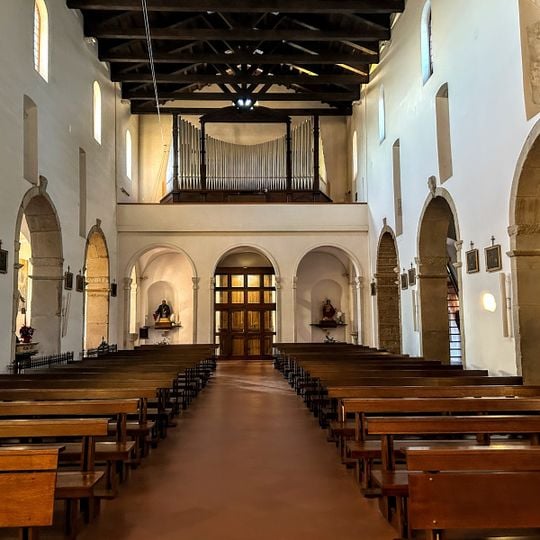
Basilica Pontificia di Santa Maria de Gulia is a place of worship perched on a hill in Castellabate. Its stone front, rounded arches, and tall bell tower catch the eye from the narrow lanes below, while inside three long sections divided by stone arches open under a wooden coffered ceiling.
The building started as a Byzantine chapel before a Romanesque church was raised on the same spot in the first half of the 1100s. It was consecrated in 1138 by Simeone, abbot of Cava, and later expanded over time, receiving the title of minor basilica in 1988.
The name Gulia comes from the hill's profile, which resembles an eagle when seen from the sea, or possibly from guglia, meaning peak. Devotion centres on Saint Costabile: a bronze bust of 1662 by Aniello Treglia was made with offerings after the plague of 1656, and a silver bust of 1993 by the Catello silversmiths of Naples replaced the 1837 one by Mattia Condursi, stolen in the 1970s.
You reach the church through a main door on Via Don Matarazzo, and the interior is accessible for people with reduced mobility. Visiting during daylight hours works well because the space stays open through the day and you can move around at your own pace.
The name Gulia comes from aferesi, because the hill seen from the sea resembles an eagle resting with its proud beak turned to the right; it could also derive from guglia, meaning peak or summit. In the left nave is a bronze bust of Saint Costabile made in 1662 by the goldsmith Aniello Treglia with offerings from the faithful after they survived the plague of 1656.
The community of curious travelers
AroundUs brings together thousands of curated places, local tips, and hidden gems, enriched daily by 92,581 contributors worldwide.