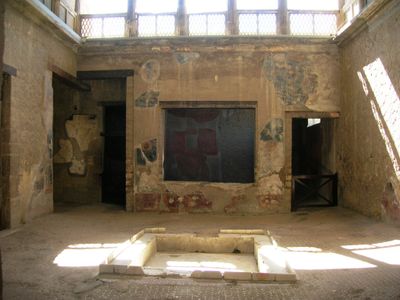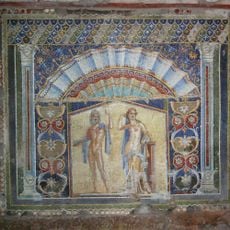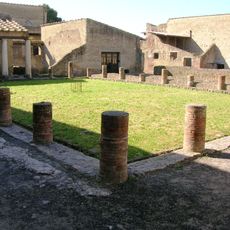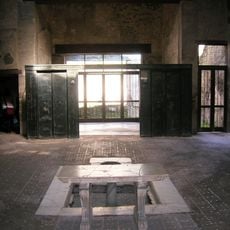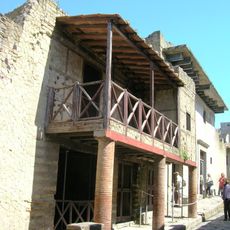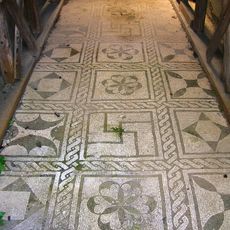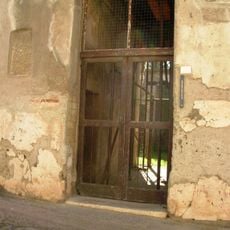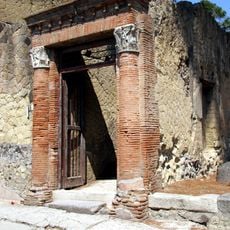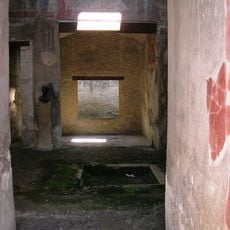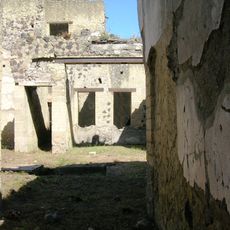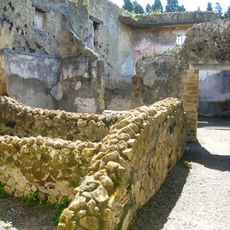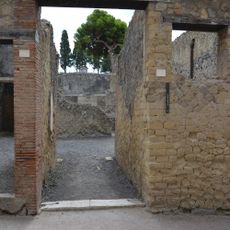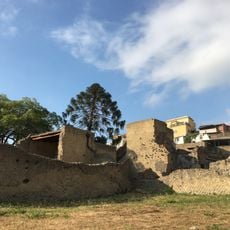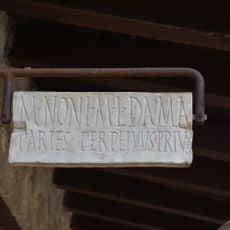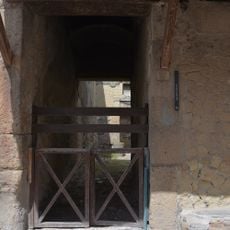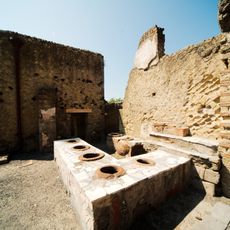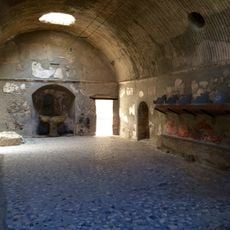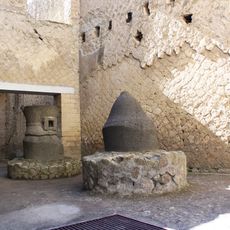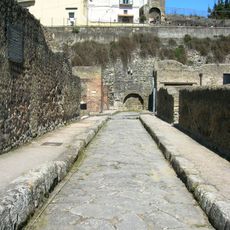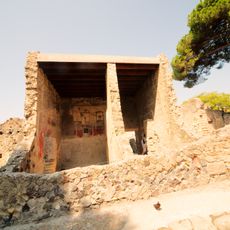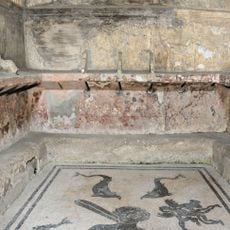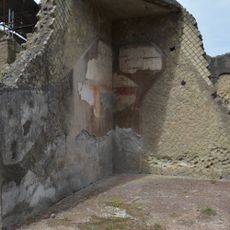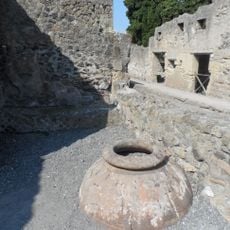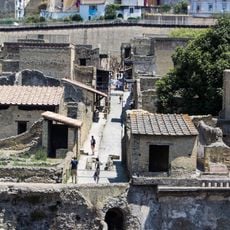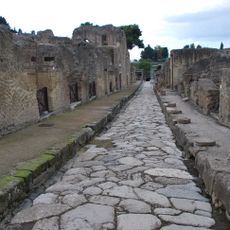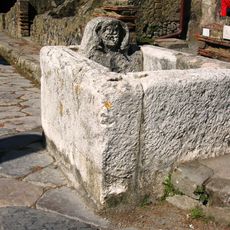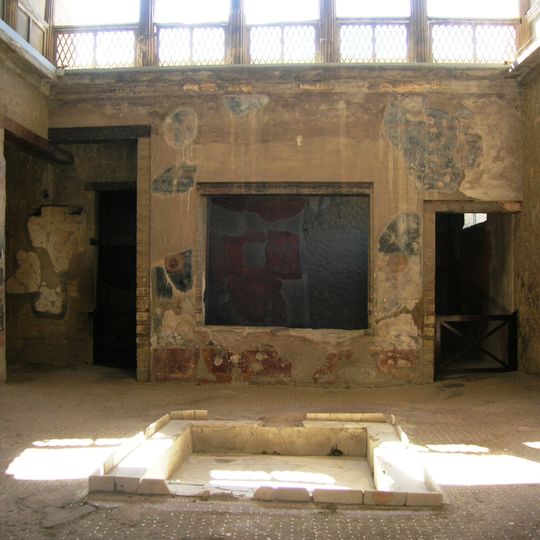
Samnite House, Ancient Roman domus in Herculaneum, Italy.
The Samnite House is a Roman private home in Herculaneum that displays a central atrium with reception rooms and service spaces arranged around it. The structure follows the traditional Roman residential design with rooms organized to provide both social and practical functions.
This residence was built in the 2nd century BCE and remained occupied until Mount Vesuvius erupted in 79 CE. The volcanic disaster preserved the structure, capturing a moment frozen in time from daily Roman life.
The house reflects how local communities blended Samnite building customs with Roman ideas in their daily spaces. You can see this mixture in the way rooms connect and how they were decorated.
You can reach this residence by entering through the main portal located where two main streets intersect in the site layout. The pathways through the archaeological area are marked, making it easy to navigate between different structures.
The south-facing wall contains an elevated support connected to the water supply system that served the city, with carved markings about water rights still visible. This reveals how individual homes were linked to the larger public infrastructure network.
Location: Ercolano
Part of: Herculaneum
Address: Insula V, 1, sul cardo IV superiore
GPS coordinates: 40.80610,14.34740
Latest update: December 6, 2025 17:43
Italy holds archaeological sites spanning several millennia, offering insights into Etruscan, Greek and Roman civilizations. These locations include necropolises with thousands of tombs, well-preserved Roman villas and ancient settlements along the Mediterranean coast. Many of these sites lie beyond the more familiar destinations and document different aspects of Italian history. The Necropolis of Pantalica near Sortino contains approximately 5,000 rock-cut tombs from the Sicilian Bronze Age, while the Villa of the Mysteries in Pompeii is known for its wall paintings from the first century BCE. Villa del Casale near Piazza Armerina displays Roman floor mosaics covering more than 37,500 square feet (3,500 square meters). Etruscan burial sites like the Tomb of the Orcus in Tarquinia preserve frescoes from the fourth century BCE. The Archaeological Park of Elea-Velia near Ascea includes remains of a Greek colony founded in the sixth century BCE.
Herculaneum
9 m
Casa dello Scheletro
55 m
Nettuno and Anfitrite domus
28 m
Terme del Foro
33 m
House of the wooden partition
25 m
Casa a Graticcio
35 m
House of the Mosaic Atrium
54 m
House of Charred Furniture
20 m
Great Portal house
28 m
Bronze Herm house
44 m
Casa del Sacello di Legno
48 m
Painted papyrus
20 m
Casa della fullonica
27 m
Domus with garden
39 m
Frame house
16 m
Brickwork house
55 m
Decumanus inferior
10 m
Big Taberna
40 m
Central thermal baths, male sector
42 m
Workshops and Sex.Patulcius Felix pistrinium
56 m
Central thermal baths, female sector
25 m
Priapo's tavern
46 m
Cardo IV
2 m
Lanarius workshop
30 m
Cardo III
55 m
Cloth house
55 m
Cardo V
47 m
Fountain of Neptune and two dolphins (Herculaneum)
46 mVisited this place? Tap the stars to rate it and share your experience / photos with the community! Try now! You can cancel it anytime.
Discover hidden gems everywhere you go!
From secret cafés to breathtaking viewpoints, skip the crowded tourist spots and find places that match your style. Our app makes it easy with voice search, smart filtering, route optimization, and insider tips from travelers worldwide. Download now for the complete mobile experience.
A unique approach to discovering new places❞
— Le Figaro
All the places worth exploring❞
— France Info
A tailor-made excursion in just a few clicks❞
— 20 Minutes