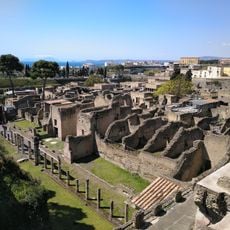
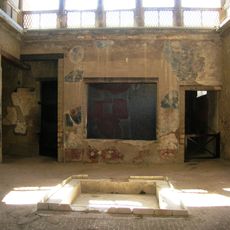
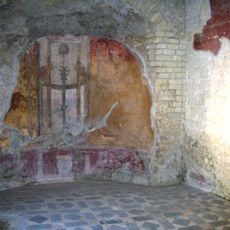
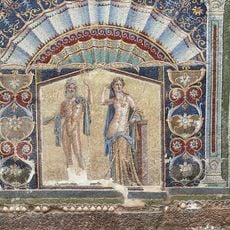
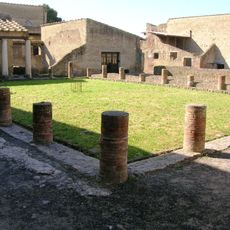
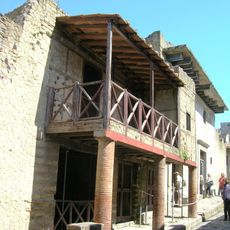
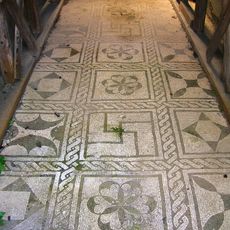
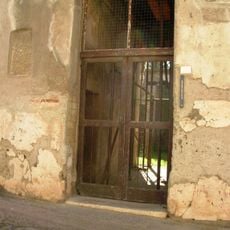
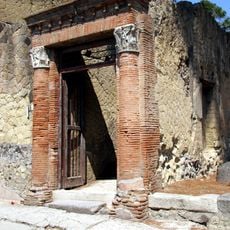
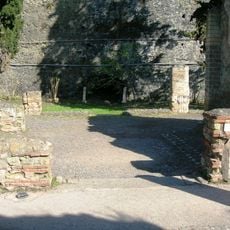
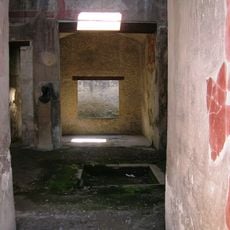
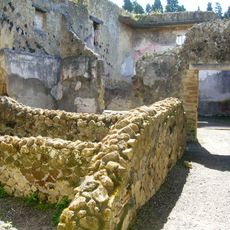
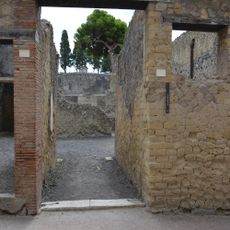
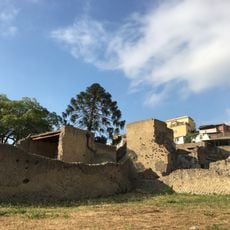
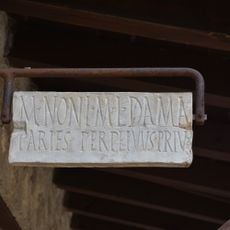
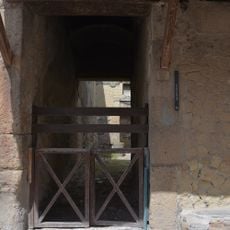
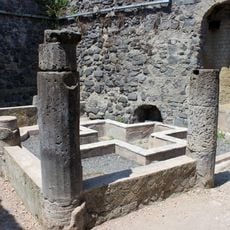
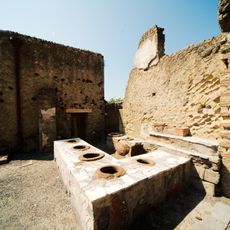
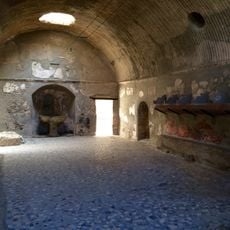
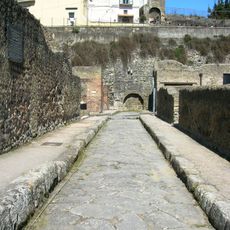
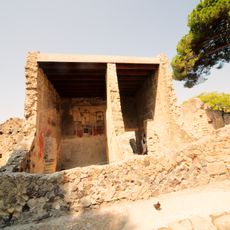
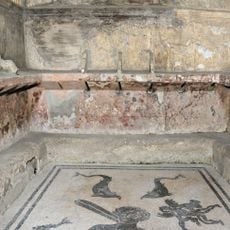
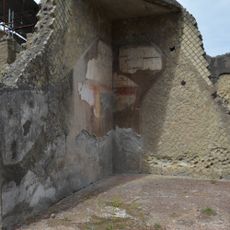
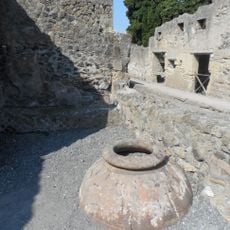
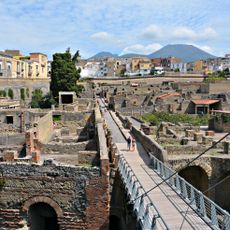
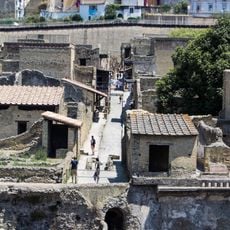
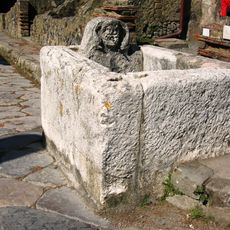
House of the wooden partition, Ancient Roman domus in Ercolano, Italy.
The House of the Wooden Partition is a Roman dwelling in Ercolano with a large wooden wall that divides the atrium from the tablinum. The partition is divided into three sections and fitted with bronze studs for mounting lamps throughout the spaces.
The building was buried by Mount Vesuvius's eruption in 79 AD and remained preserved under volcanic mud for nearly 2,000 years. Excavations during the 20th century brought it back to light as a remarkably intact Roman home.
The house takes its name from the carbonised wooden partition between the atrium and the tablinum, a folding door as tall as a man, with shaped panels and large bronze rings that held lamps. In the atrium, a marble cartibulum decorated with lion heads was found, and the walls carry third-style frescoes with white, red and yellow panels.
The house opens off Cardo III, where a staircase along the street leads to the upper floor; the north side facing the road holds shops carved out in the city's final period. In one of them a loom weight for weaving was found, and from that same shop a small stair climbs to a flat above the vestibule. Look for the masonry benches at the facade, where clients waited.
What stands out is the exceptional preservation of the original wooden wall that separated the inner rooms from each other. Such well-preserved Roman carpentry is rarely found in archaeological sites.
The community of curious travelers
AroundUs brings together thousands of curated places, local tips, and hidden gems, enriched daily by 92,854 contributors worldwide.