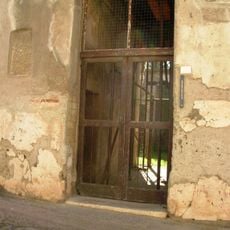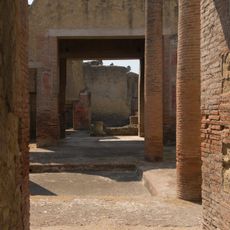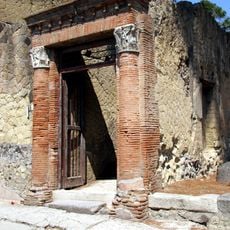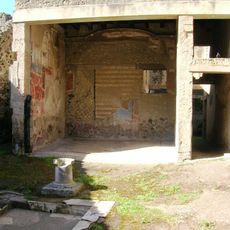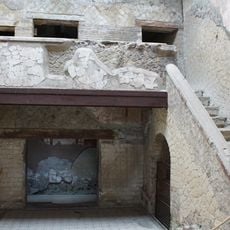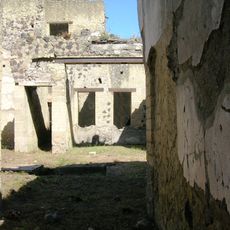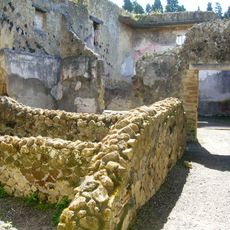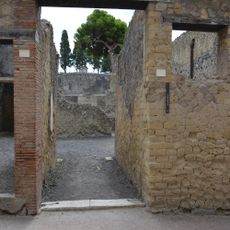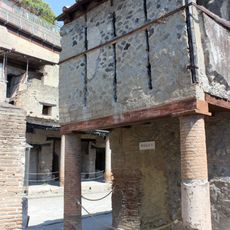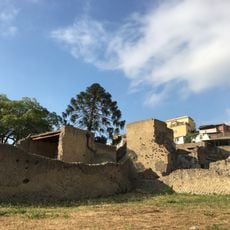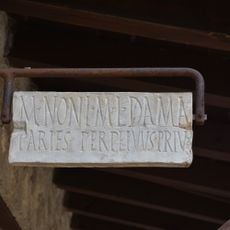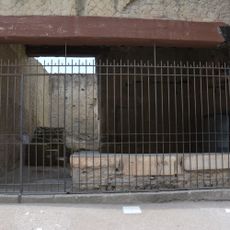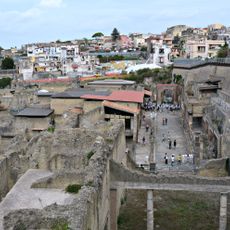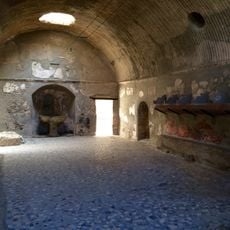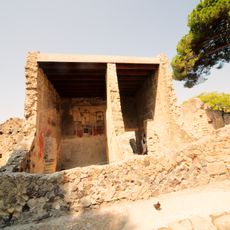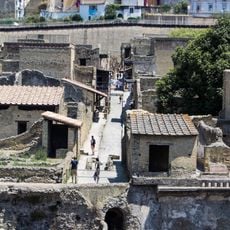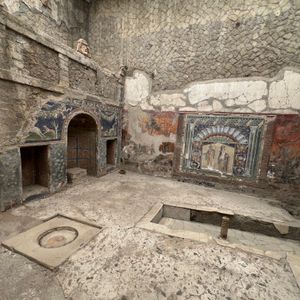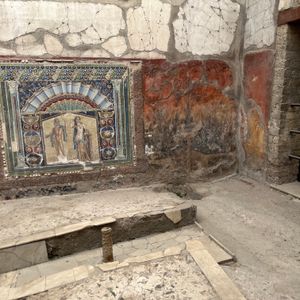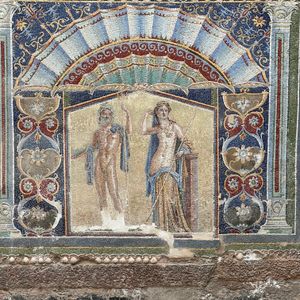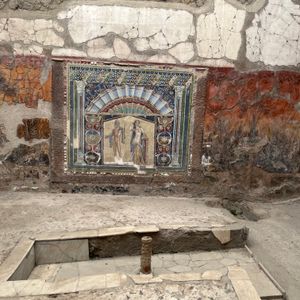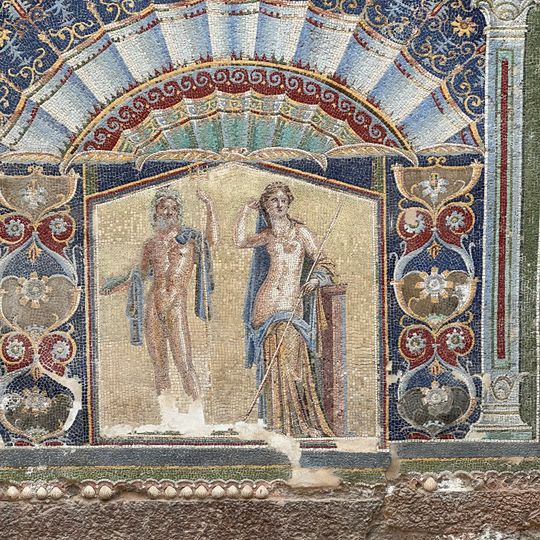
Nettuno and Anfitrite domus, Roman residential structure in Ercolano, Italy.
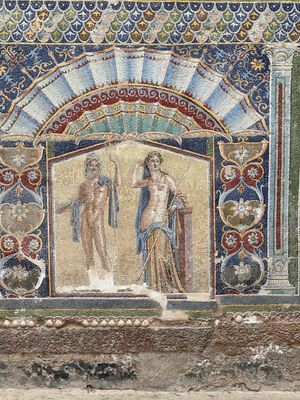
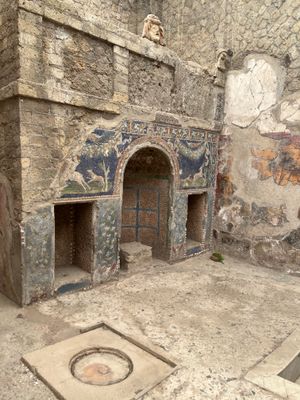
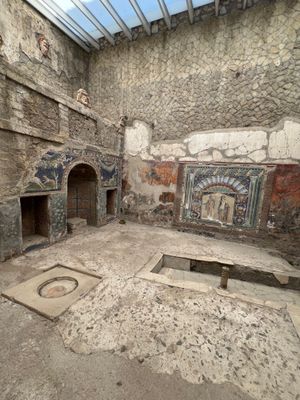
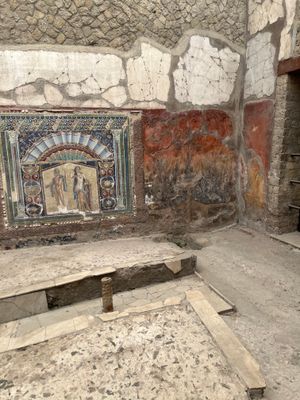
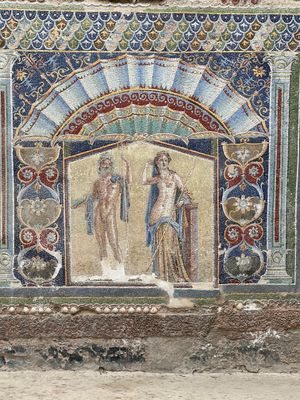
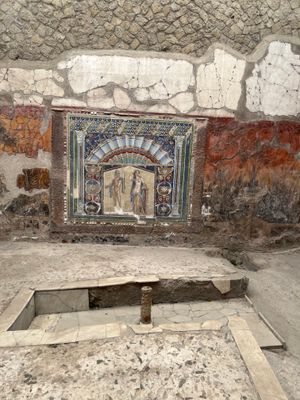
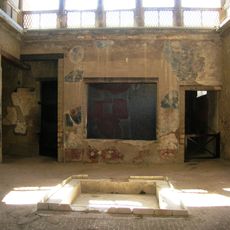
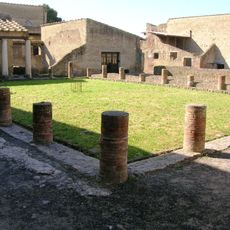
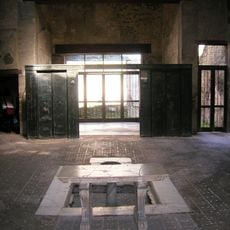
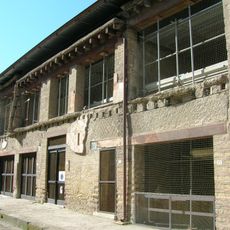
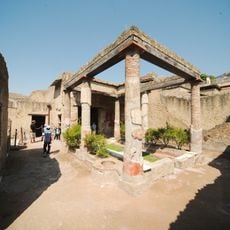
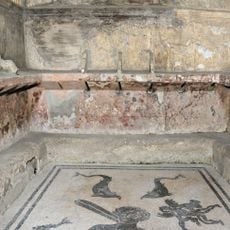
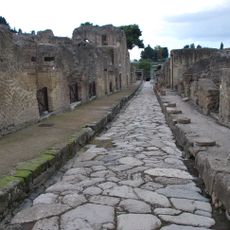
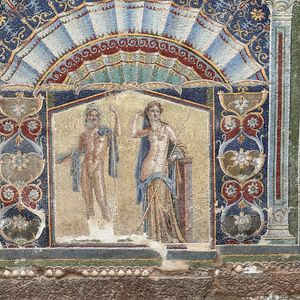
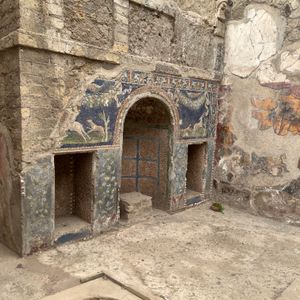
The Nettuno and Anfitrite domus is a Roman house of about 200 square metres on the cardo IV in Herculaneum, facing the women's section of the Forum Baths. Its rooms follow the classic domus plan around an atrium with a marble impluvium; the summer dining room at the rear holds a marble basin, a three-niche nymphaeum and a glass-paste mosaic of Neptune and Amphitrite.
The residence was buried under volcanic material during the Mount Vesuvius eruption in 79 AD, which preserved its original structure and decoration. This rapid burial protected the building and its contents from damage and decay.
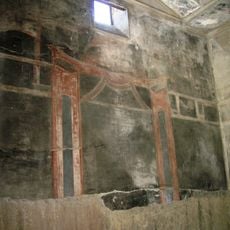
The house reveals how wealthy Romans displayed their status through fine mosaics and painted walls featuring mythological scenes. Such decoration shows what artistic styles and craftsmanship these households valued and admired.
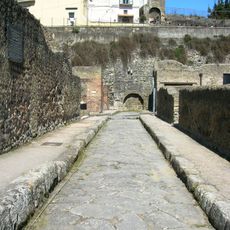
The domus lies along cardo IV, opposite the entrance to the women's section of the Forum Baths, and covers about 200 square metres. The upper floor partly collapsed in the eruption and is not visitable; the rooms open today are on the ground floor. Look for the lead pipes crossing the fauces floor and the three bed marks in the summer dining room.
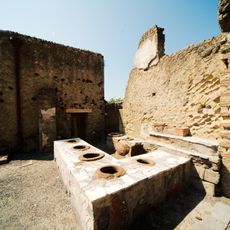
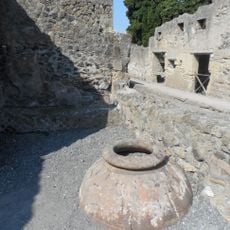
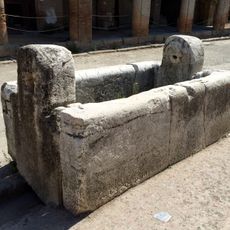
The food finds belong to the caupona beside the entrance, not to the house: chickpeas and broad beans were found in the jars set into its masonry counter. A narrow corridor links this shop directly to the domus, and wooden furniture and tableware were recovered inside.
The community of curious travelers
AroundUs brings together thousands of curated places, local tips, and hidden gems, enriched daily by 93,610 contributors worldwide.