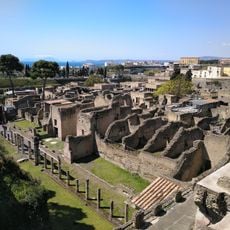
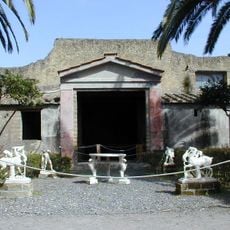
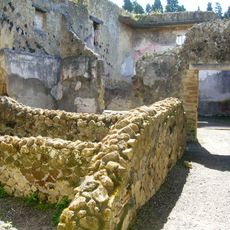
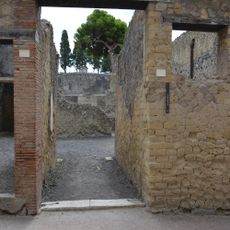
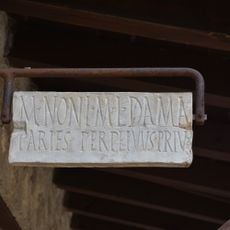
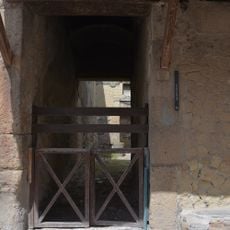
House of the Mosaic Atrium, Ancient Roman domus in Ercolano, Italy
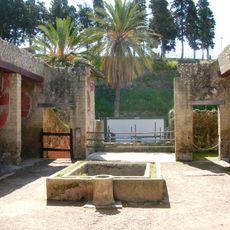
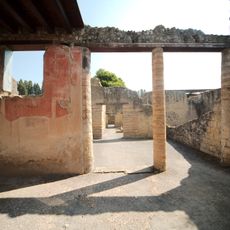
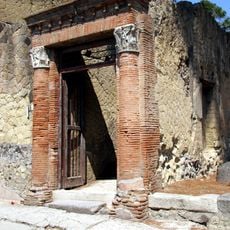
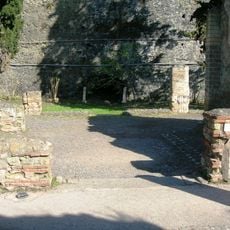
The House of the Mosaic Atrium is a Roman residence in Ercolano with a lower floor covering about 1200 square meters (12,900 sq ft). Its rooms are paved with black and white geometric patterns, particularly in the entrance corridor and atrium where large rectangular designs dominate the flooring.
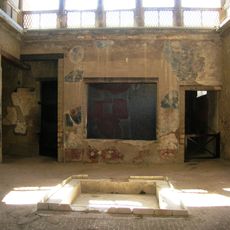
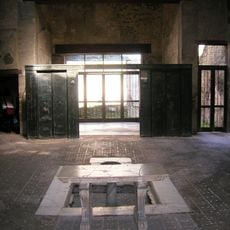
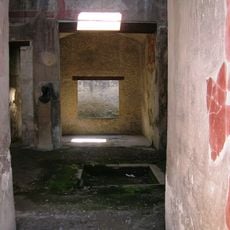
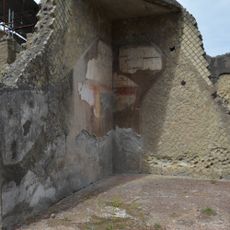
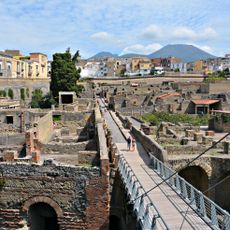
The house was buried under mud in the eruption of 79 AD. Bourbon investigators explored it through tunnels in the 18th century, and Amedeo Maiuri brought it to light in the 20th century. Maiuri identified the room at the back of the atrium as an Egyptian oecus, the only example in the Vesuvian area.
The tablinum functioned as the owner's office and was arranged like a basilica, with a central hall and smaller side sections flanking it. This design shows how affluent Romans organized their private workspace within the home.
The flooring in the entrance hall and atrium displays well-preserved black and white mosaic patterns that are easy to view. Plan time to observe these details closely, as the atrium forms the central focus of the entire structure.
The tablinum at the back of the atrium was later converted, according to Amedeo Maiuri, into an Egyptian oecus, the only example in the Vesuvian area: a dining hall split into three aisles by two rows of stucco-clad pillars carrying an upper floor with skylight windows.
The community of curious travelers
AroundUs brings together thousands of curated places, local tips, and hidden gems, enriched daily by 92,850 contributors worldwide.