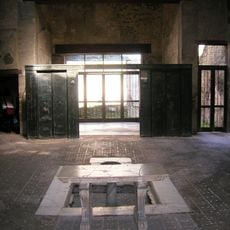
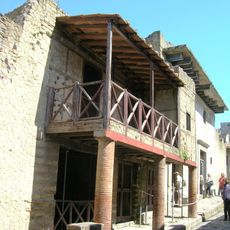
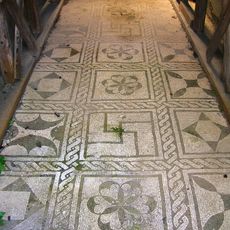
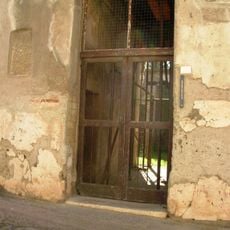
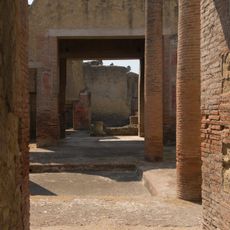
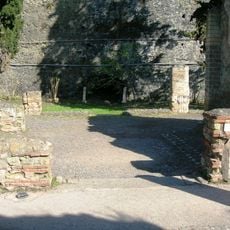
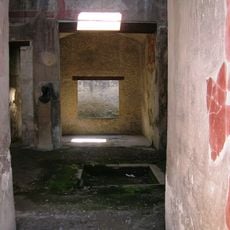
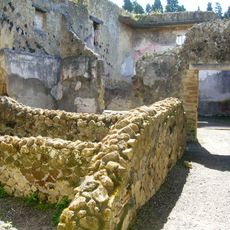
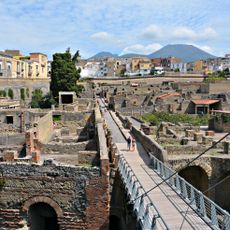
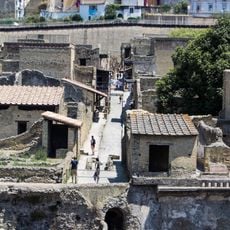
Argo's house, Ancient Roman residence in Ercolano, Italy
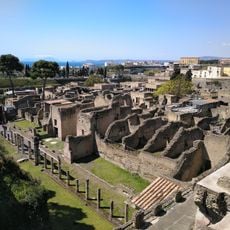
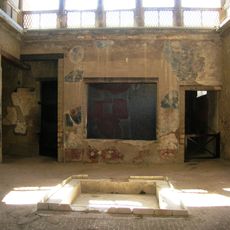
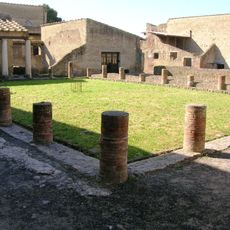
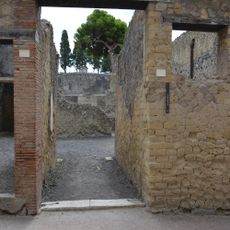
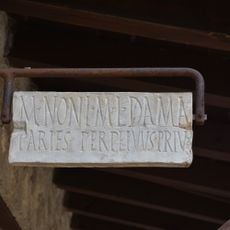
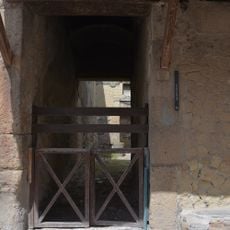
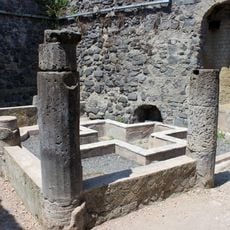
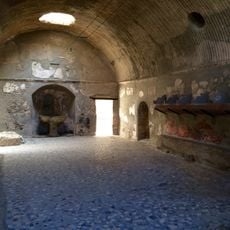
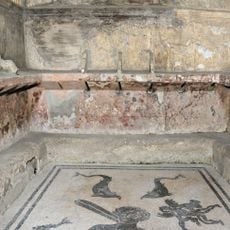
Argo's house is a Roman domus in Herculaneum, entered today from Cardo III through a secondary door or through a breach opened in the Bourbon period in the wall shared with the House of Aristides. Its main entrance on Cardo II is still unexcavated. A portico on three sides with stuccoed columns surrounds the peristyle, off which open the triclinium and residential rooms; a small door leads to a second, smaller peristyle whose columns are visible through Bourbon tunnels.
The house was buried by pyroclastic flows in the eruption of Vesuvius in 79 AD. Bourbon investigations brought part of it to light, with open-air excavations in the mid-19th century and again in the early 20th century under Amedeo Maiuri. Around 1820 the upper floor was found in such good condition that it caused a sensation; it was destroyed after 1875, except for one room above the exedra.
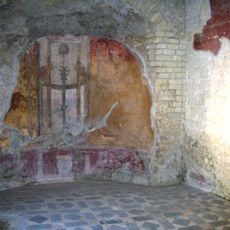
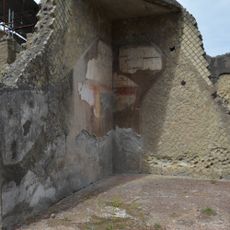
The house takes its name from a lost peristyle fresco showing Argos watching the nymph Io. The only surviving decorations are stucco near the secondary entrance and Fourth Style painted panels in the exedra, with a red ground, a geometric and architectural border, and a central mythological scene.
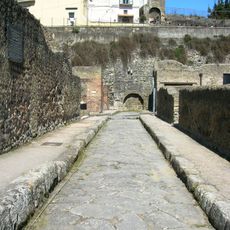
The structure is located in the eastern section of Herculaneum and can be accessed through Cardo III, while the western portion remains buried beneath modern buildings. Visitors should know that only the excavated areas are walkable and much of the site lies underneath the contemporary city.
In the rooms above the exedra, used as a storeroom, excavators found flour, loaves waiting to be baked, and terracotta jars filled with almonds, pulses, olives, spelt and fruit. This upper floor was visible until open-air digging stopped in 1875, after which it was destroyed except for one room.
The community of curious travelers
AroundUs brings together thousands of curated places, local tips, and hidden gems, enriched daily by 92,846 contributors worldwide.