House of the Relief of Telephus, Roman residential building in Ercolano, Italy
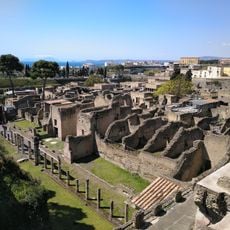
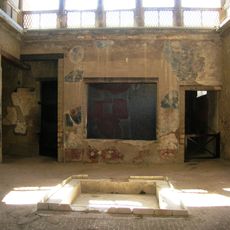
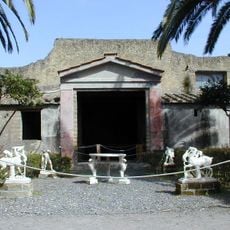
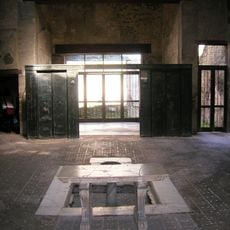
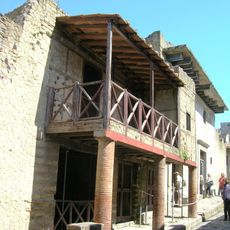
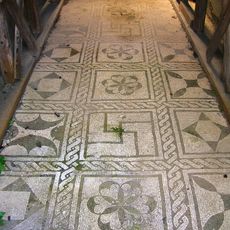
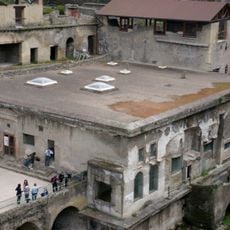
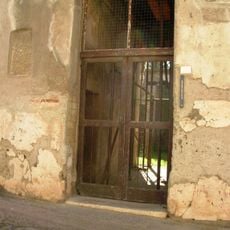
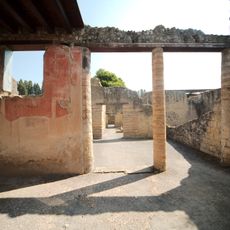
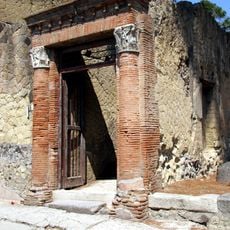
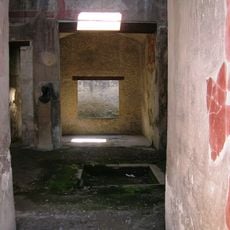
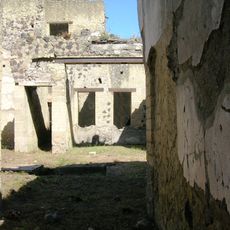
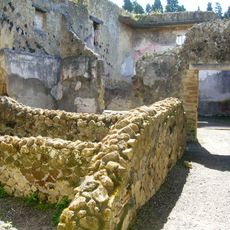
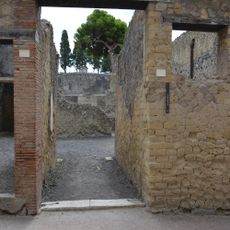
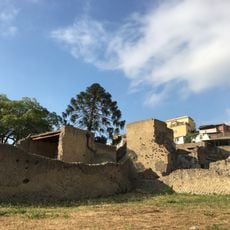
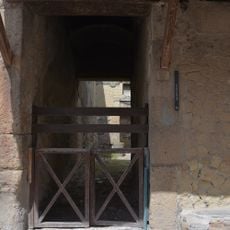
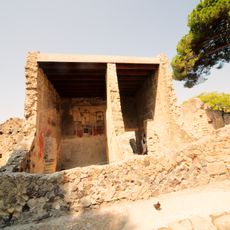
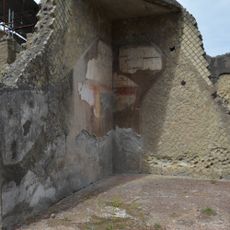
The House of the Relief of Telephus covers 1,800 square metres, making it Herculaneum's second-largest house after the Casa dell'Albergo. It has an irregular plan on three levels, the result of expansions toward the sea, and a private entrance to the Suburban Baths. Its atrium resembles a Hellenistic peristyle, with a marble impluvium and brick columns coated in red stucco.
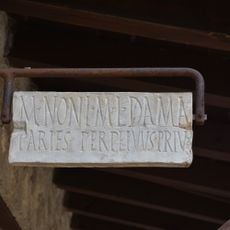
The house was originally joined to the Casa della Gemma and probably belonged to Marcus Nonius Balbus; the two were separated under Augustus. Repairs followed the earthquake of 62 AD, and the eruption of 79 AD buried it in mud. Amedeo Maiuri brought it to light in the early 20th century.
The house takes its name from a high relief of the myth of Telephus, son of Hercules, found in a diaeta off the atrium; a copy is displayed there today. Eight marble oscilla with Dionysiac scenes stood between the atrium columns, and a bronze seal, probably a slave's, was also recovered.
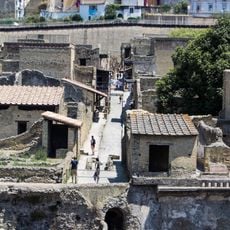
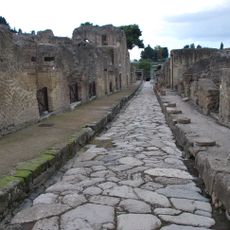
The house sits within the Herculaneum archaeological site and is accessible via marked pathways indicated on provided site maps. Wearing comfortable shoes is advisable since the ground is uneven and some areas feature tight spaces with low ceilings.
During excavations on the beach, about a metre of mud was removed to reveal thirty square metres of uncarbonised wooden roof pieces from the house. They kept their blue and red paint and still show the joints where they fitted together.
The community of curious travelers
AroundUs brings together thousands of curated places, local tips, and hidden gems, enriched daily by 92,893 contributors worldwide.