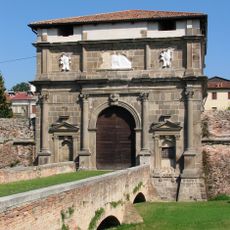
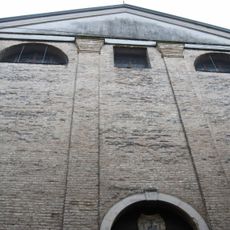
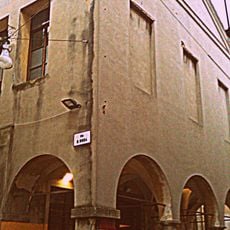
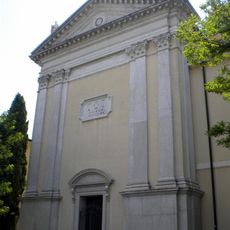
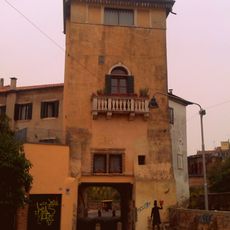
Castelvecchio, Medieval castle in Padua, Italy.
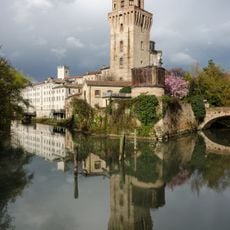
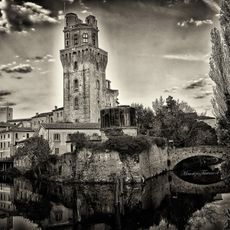
Castelvecchio stands where the Bacchiglione splits into the Tronco Maestro and the Naviglio interno. Its core is the Torlonga, a tower built in the 9th century and first mentioned in 1062; the Da Carrara rebuilt the castle in 1374, painting the two towers with white and red checks. The Torlonga has housed the city's astronomical observatory since 1777.
A defensive system existed here by the early Middle Ages, centred on the Torlonga tower, built in the 9th century where the Bacchiglione splits and first cited in 1062. Ezzelino III da Romano began the castle in 1237, using bricks taken from ten demolished patrician houses; from 1241 he held prisoners in its underground cells. The Da Carrara rebuilt it in 1374, and after 1513 it took the name Castelvecchio.
The name changed with the fortress itself: Castello della Torlonga until the Castelnuovo was begun after 1513, then Castelvecchio. Romantic-era writers called it Castello di Ezzelino, and today it is often Castello Carrarese. Piazza Castello in front served under Venetian rule for military drills and capital executions.
The castle stands where the Bacchiglione splits into the Tronco Maestro and the Naviglio interno, at Piazza Castello. The Torlonga, now the Specola observatory, rises above the square; the prison administration still keeps offices there. The complex is reached on foot from Padua's centre, and restoration for museum use has been under way since the early 21st century.
The two towers were painted with white and red checks after the Da Carrara rebuilt the castle in 1374. An elevated passage called the traghetto linked it to the Reggia Carrarese, usable only by the prince and his provisionati. The Torlonga has housed Padua's astronomical observatory, the Specola, since 1777.
The community of curious travelers
AroundUs brings together thousands of curated places, local tips, and hidden gems, enriched daily by 92,705 contributors worldwide.