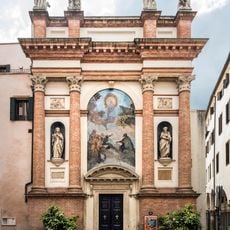
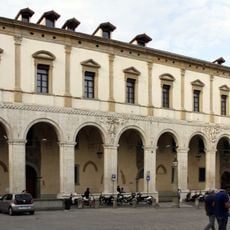
Padua Synagogue, Baroque synagogue in Padua, Italy
The Padua Synagogue occupies a Baroque hall measuring 18 by 7 metres at 9 Via San Martino e Solferino, in the historic ghetto. Its Torah Ark, made of plane-tree wood, has gilded doors, four black marble Corinthian columns with white veining and carved foliage, topped by a broken pediment. The Bimah stands on a curved flight of eight steps on each side, under an octagonal canopy on four columns and four pilasters. A coffered, painted barrel vault with carved rosettes spans the space between them.
The synagogue was built in 1548 and served as the main place of Jewish worship in the city for centuries. Despite undergoing several renovations over the years, it remained the central gathering place for the local Jewish community.
The Ark and Bimah stand on the long walls, not at opposite ends as in most Italian synagogues, leaving the centre free for processions. The historic women's gallery upstairs is no longer used; women now sit in a section on the main floor. Students at the university are welcome to pray with the congregation.
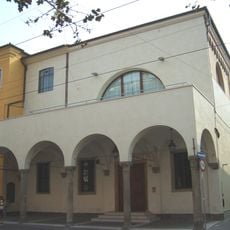
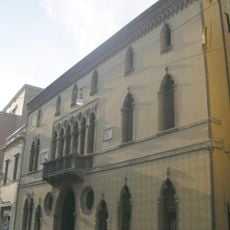
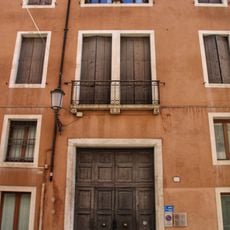
The synagogue stands at Via San Martino e Solferino 9, in the historic ghetto, in the same building as the offices of the Jewish community of Padua. Visitors arrange a visit by contacting the Jewish community in advance; there is no separate museum entrance. University students visiting Padua are welcome to pray with the congregation.
The Baroque Torah Ark, made of wood from a plane tree struck by lightning in the University of Padua's botanical garden, has gilded doors, four black marble Corinthian columns with white veining, and a broken-pediment baldachin. The Ark and Bimah stand on the room's long walls, unlike the usual Italian layout.
The community of curious travelers
AroundUs brings together thousands of curated places, local tips, and hidden gems, enriched daily by 94,456 contributors worldwide.