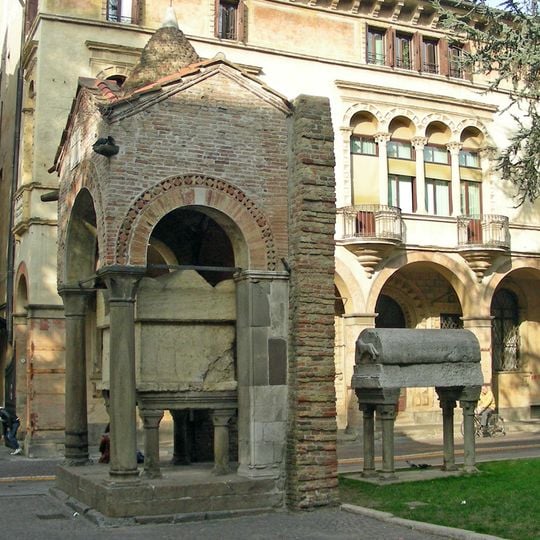
Tomb of Anthenor, Medieval monument in Piazza Antenore, Padua, Italy
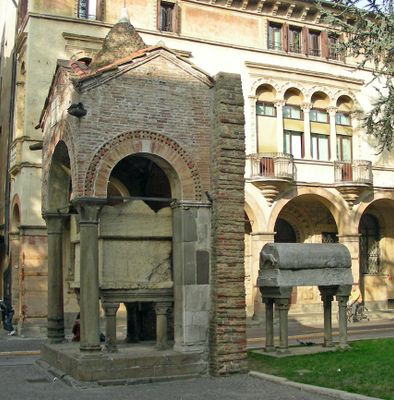
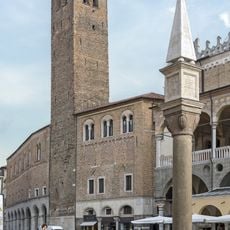
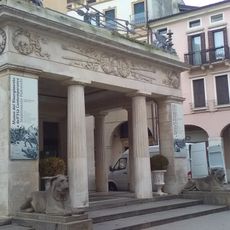
The Tomb of Antenor is a monument in the historic center of Padua, consisting of a marble sarcophagus placed under a protective stone tabernacle structure in Piazza Antenore. The sarcophagus sits raised on a base, making it clearly visible from the surrounding square.
The sarcophagus was uncovered in 1274 during construction work, and the scholar Lovato dei Lovati attributed it to the Trojan hero Antenor, founder of Padua in legend. The current tabernacle structure was built shortly after to protect and display the find.
The piazza surrounding the tomb takes its name from Antenor, the Trojan hero credited with founding Padua. Locals and visitors pass by the monument daily, and it remains a quiet but meaningful reference point in the city's sense of its own origins.
The monument stands next to Palazzo Bo and is easy to reach on foot from anywhere in Padua's historic center. The piazza is open at all times, so a visit can fit naturally into a walk through the area.
During renovations in 1995, bone fragments found inside the sarcophagus were dated to the 3rd or 4th century CE, many centuries after the legendary Trojan hero would have lived. This means the remains inside do not match the story attached to the tomb, yet the monument still carries the same name.
The community of curious travelers
AroundUs brings together thousands of curated places, local tips, and hidden gems, enriched daily by 60,000 contributors worldwide.