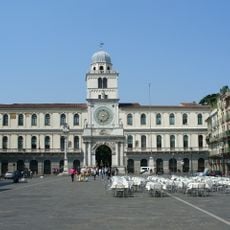
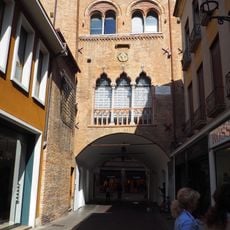
Town hall, Municipal palace complex in Padua, Italy
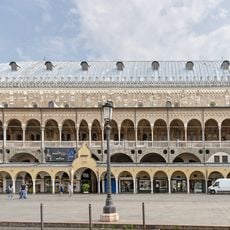
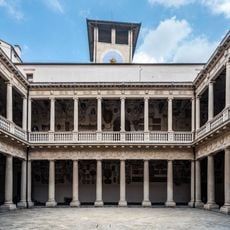
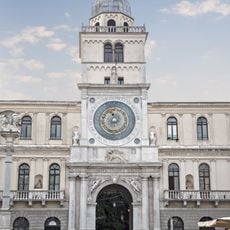
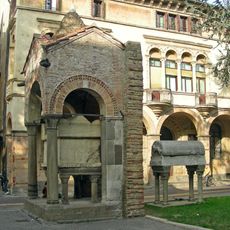
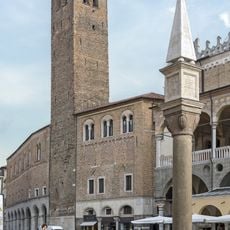
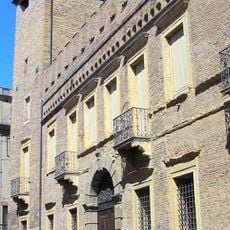
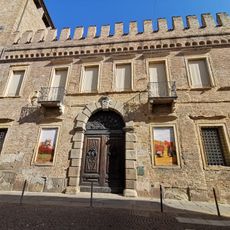
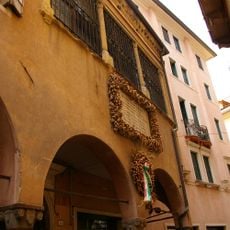
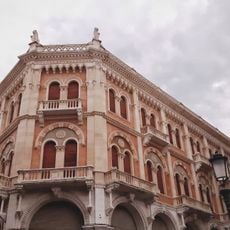
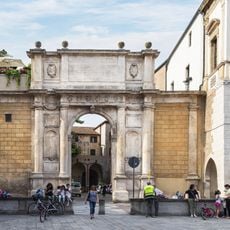
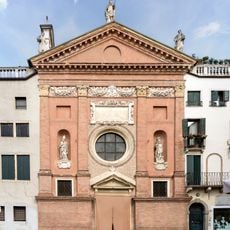
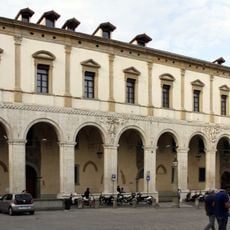
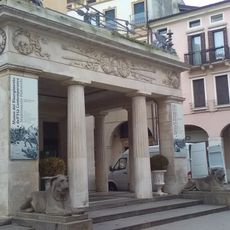
The Palazzo Comunale is a set of connected buildings of different periods between Piazza delle Erbe and Piazza della Frutta, along via Oberdan and via VIII Febbraio. It includes the 13th-century Palazzo della Ragione, the Palazzo del Consiglio with its loggia on trachyte and white stone, the Torre degli Anziani, the Palazzo del Podestà rebuilt in the 16th century by Andrea Moroni, and the Palazzo delle Debite, rebuilt by Camillo Boito.
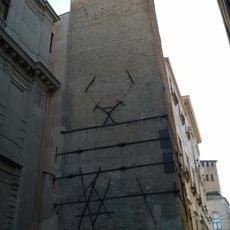
Civic administration has occupied these sites since the 12th century. The Palazzo della Ragione was begun in 1218 to house the city courts, and in 1215 Tiso VI da Camposampiero ceded the tower to the city, which became the Torre degli Anziani. Fra' Giovanni degli Eremitani enlarged the Palazzo della Ragione from 1306, adding the ship's-hull vault and twin loggias over the market; a fire struck it in 1420 and a whirlwind unroofed it in 1757. Its great hall served as a court until 1797.
The upper floor of the Palazzo della Ragione holds one of the largest hanging halls in the world, its walls covered by a 14th–15th-century astrological fresco cycle to which Giotto di Bondone originally contributed. The hall served as the city's court until 1797 and is now used for public ceremonies and exhibitions.
The complex stretches between Piazza delle Erbe and Piazza della Frutta, along the old via del Sale (now via Oberdan) and the Liston of via VIII Febbraio. The Palazzo della Ragione's great upper hall is used for public ceremonies and exhibitions, so access to it may be closed during events. The Palazzo delle Debite, the former prison rebuilt by Camillo Boito, now belongs to INPS and is not part of the civic tour.
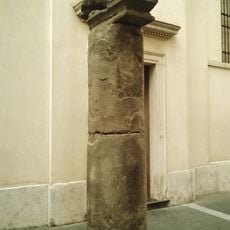
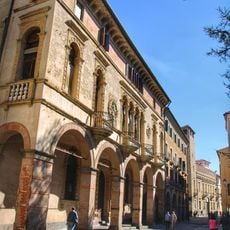
The Palazzo del Consiglio, rebuilt in 1285 by the architect Leonardo Zise for the Florentine podestà Fantone de' Rossi, still shows Zise's name carved on an outer corner. Its ground-floor loggia, supported by Proconnesian marble columns with two Carolingian capitals, was occupied by shops in 1772; among them, at piazza dei Frutti 46, the spice shop "Ai due catini d'oro" keeps its old sign, a balance with two golden basins, and a layout dating to 1841.
The community of curious travelers
AroundUs brings together thousands of curated places, local tips, and hidden gems, enriched daily by 92,968 contributors worldwide.