Walls of Padua, City walls in Padua, Italy
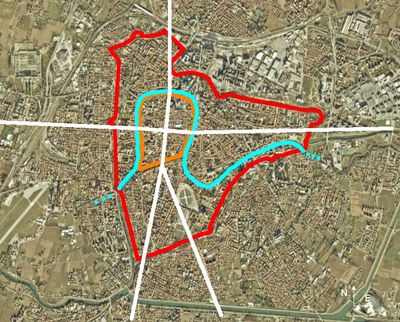
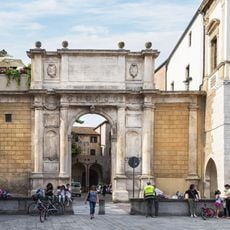
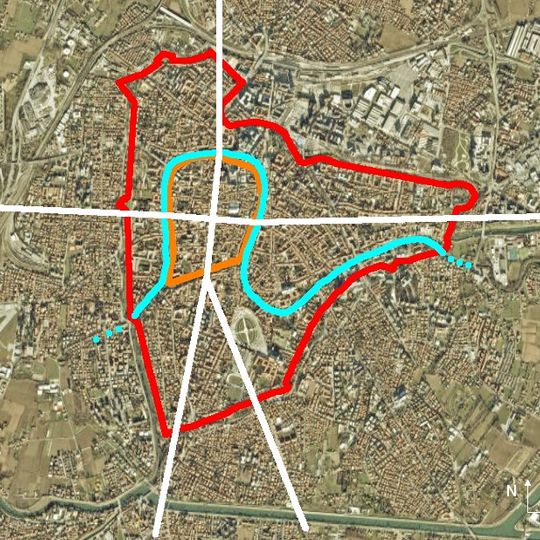
The Walls of Padua consist of four distinct construction phases built over time, running along the path of the Bacchiglione River. Multiple gates pierce the defensive line and once served as control points where merchants and travelers passed through to reach the city center.
The city's defensive walls were commissioned by the Paduan Comune and used two branches of the Bacchiglione River as natural protective ditches. Later 16th-century construction work, led by Giovanni Maria Falconetto, added new architectural elements and strengthened the defenses against external threats.
Porta Savonarola displays Venetian architectural style with the Lion of Saint Mark carved into its stone, marking the city's historical connection to the Venetian Republic. Walking along these passages, you notice how local residents treat them as part of their daily routes and gathering spaces.
You can explore the walls on foot and access the upper pathways from several gates, where views of the city open up. The best time for a walk is early morning or late afternoon, when light is favorable and crowds are lighter.
The upper floors of Porta Molino were repurposed as a water reservoir in the late 1800s to supply the city's first clean drinking water. This practical adaptation shows how the medieval structure was modified to meet growing urban needs.
The community of curious travelers
AroundUs brings together thousands of curated places, local tips, and hidden gems, enriched daily by 60,000 contributors worldwide.