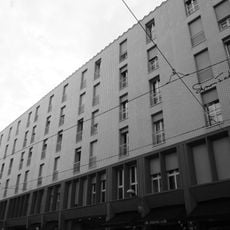
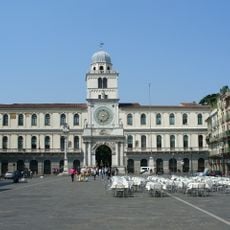
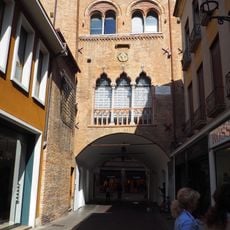
Palazzo delle Debite, Romanesque Revival palace in central Padua, Italy.
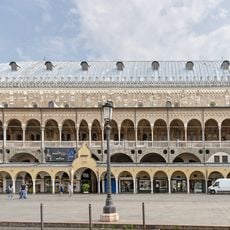
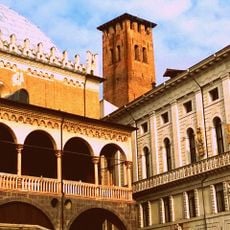
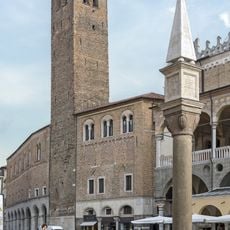
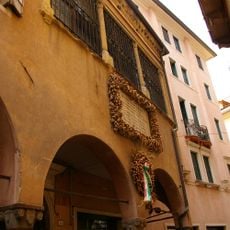
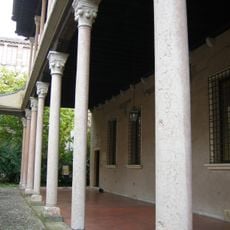
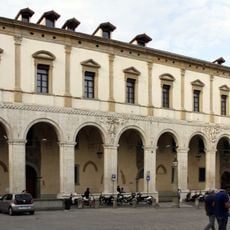
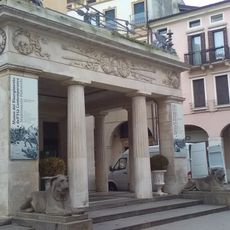
Palazzo delle Debite is a palace on Piazza delle Erbe in Padua, built in 1874 to a design by Camillo Boito. Its ground-floor portico has tall columns of Botticino stone from Brescia and a ceiling with cast-iron elements; the two upper floors have bifora windows, and the facade is framed by brickwork and stone buttresses from the Euganean Hills. The building has only two floors so as not to exceed the height of the adjacent Palazzo della Ragione.
The palace was built in the 19th century as part of a movement reviving medieval Romanesque elements in urban design. It emerged during a period when architects looked to historical forms and adapted them for contemporary buildings.
The name "delle Debite" recalls the debtors' prison (prigioni delle debite, Carcer Novus) that stood on this spot until its demolition in 1873. Boito's building kept a commercial role: the ground-floor portico housed shops, while the upper floors became private flats. Look for the lions holding a shield on the corner pillars of the attic.
The palace sits in Padua's historic center and is easy to reach on foot while exploring nearby squares. The area offers clear orientation points and can be accessed from several streets.
The palace stands on the site of the Carcer Novus, the old debtors' prison demolished in 1873; its name, "Palazzo delle Debite", still recalls the "prigioni delle debite" that occupied the spot before Boito's rebuilding.
The community of curious travelers
AroundUs brings together thousands of curated places, local tips, and hidden gems, enriched daily by 92,889 contributors worldwide.