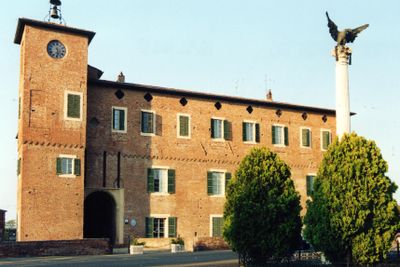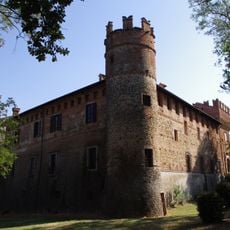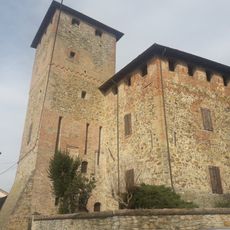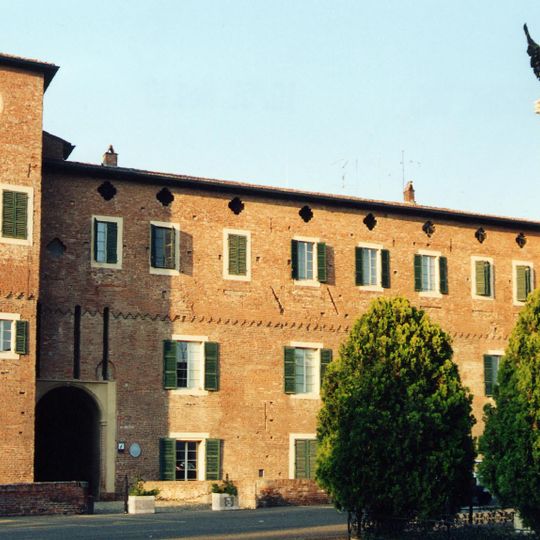
Castello di Borgonovo, Medieval fortress in Borgonovo Val Tidone, Italy.
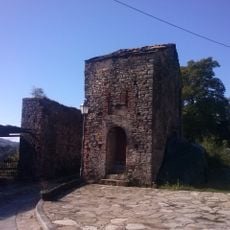
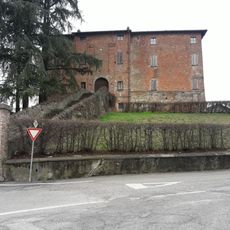
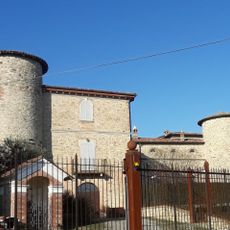
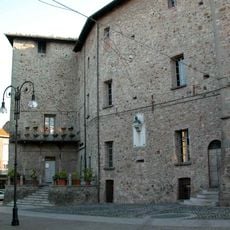
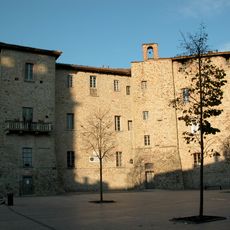
Castello di Borgonovo is a brick fortress with a rectangular plan and two towers at the south-west and north-east corners, standing in the centre of Borgonovo Val Tidone on the Po plain at the mouth of the lower Tidone valley. Its façades carry a 14th-century sawtooth motif. Two entrances, one off-centre on the south side near a tower and one opposite, are reached by masonry bridges on pointed arches over a drained moat, built where the drawbridges once stood.
Borgonovo was founded in 1196 by the commune of Piacenza as a fortified outpost near Casarnerio, to guard the western border of Piacenza's territory. Pavia's troops razed it three years later, and in 1237 the Piacentines themselves burned it on the order of podestà Arrigo da Monza to keep it from Frederick II. In 1412 Filippo Maria Visconti granted the fief to the Arcelli, and in 1691 the Zandemaria turned the castle into a noble residence.
The name Borgonovo was chosen in 1196 to contrast with Borgo San Donnino, today's Fidenza, then under Piacenza's rule. In 1691 the Zandemaria marquises turned the fortress into a noble residence and assembled a picture gallery of 240 works by painters such as Correggio, Guercino and Guido Reni. Since 1875 the building has housed municipal offices, a district court and a jail.
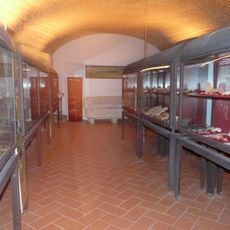
Visits are available only through guided tours arranged by Atlante Turismo, which include access to the inner courtyard and historical rooms. It is advisable to book in advance and check opening times, as access is restricted to organized visits.
The two brick bridges over the filled-in moat replaced drawbridges; the slots of the old drawbridges were uncovered during the 20th-century restorations. The moat was filled and the earthworks levelled after 1875, when the municipality bought the castle to give work to unemployed citizens.
The community of curious travelers
AroundUs brings together thousands of curated places, local tips, and hidden gems, enriched daily by 94,653 contributors worldwide.