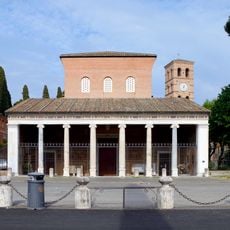
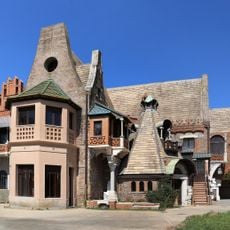
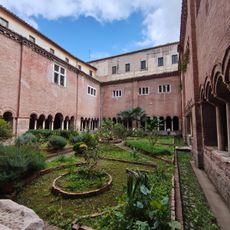
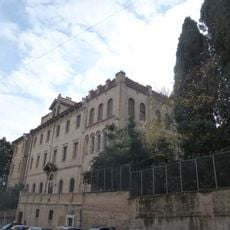
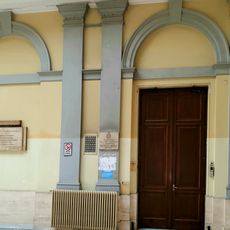
Catacomb of Sant'Ippolito, Archaeological burial site in Rome, Italy.
The Catacomb of Sant'Ippolito is a five-level underground cemetery on Via Tiburtina, entered from Via dei Canneti; only the middle level is accessible. Its oldest core grew around the hypogean basilica that Pope Vigilius built in the 6th century over the tomb of Hippolytus, after Pope Damasus had monumentalized an earlier crypt in the second half of the 4th century.
The oldest part grew around a crypt monumentalised by Pope Damasus in the second half of the 4th century; in the 6th century Pope Vigilius built a subterranean basilica over Hippolytus's tomb, and a pilgrims' route was cut through the cemetery. Antonio Bosio explored it in the late 16th century but took it for the nearby Catacomb of San Lorenzo; Marcantonio Boldetti identified it correctly in the early 18th century. Used as an air-raid shelter in World War II, it was later studied by Gabriel Bertonière and Umberto Maria Fasola.
The burial niches display marble and clay gravestones with inscribed names and early Christian symbols that show how the community expressed their faith through burial customs.
The site is located in Rome and is accessible for those exploring the city's archaeological heritage. When visiting, keep in mind that underground spaces can be cool and dark, and some surfaces may be slippery or uneven underfoot.
The statue of Saint Hippolytus found here in 1553 by Pirro Ligorio is now in the entrance hall of the Vatican Apostolic Library. Its stool bears Greek titles of his works, but Margherita Guarducci showed Ligorio assembled it from 2nd-century statue fragments, carving the head, arms and upper bust himself.
The community of curious travelers
AroundUs brings together thousands of curated places, local tips, and hidden gems, enriched daily by 93,142 contributors worldwide.