Catacombe of San Lorenzo, Catacombs in the Tiburtino district, Rome, Italy
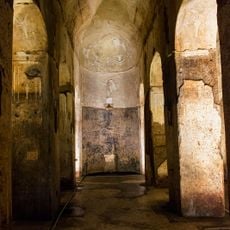
The Catacombe di San Lorenzo is a subterranean burial complex with multiple levels of tunnels where rectangular niches carved into the walls held the deceased. The network extends across different depths and shows how this underground cemetery was systematically used as a burial ground over time.
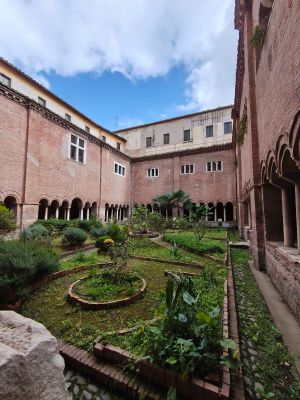
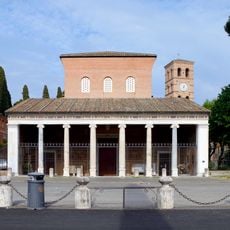
Saint Lawrence was killed on 10 August 258 and buried in a cemetery on the Via Tiburtina. Decades later Constantine built an oratory over the tomb and a large circiform basilica nearby, the ecclesia maior. Pope Pelagius II (579-590) replaced the Constantinian oratory with a new basilica directly on the tomb, the ecclesia minor; in the early 13th century Honorius III extended it into today's basilica, making the Pelagian church its presbytery.
The site displays early Christian burial practices, with bodies placed in wall niches throughout the underground corridors for community members seeking sacred ground. Walking through the passages, you can observe how the layout reflects the religious importance these families placed on resting near Saint Lawrence.
Access to the catacombs requires advance arrangements made through local contacts, as visits are not open to the public spontaneously. The underground passages are narrow and dark, so wear comfortable shoes and prepare for uneven surfaces and confined spaces.
Antonio Bosio's 1593 survey in Roma sotterranea records stretches of the catacomb, including the crypt of Saint Lawrence, that are now destroyed or cannot be traced; his text is therefore the main record of those lost areas. In 1947-1949 the shrines of martyrs Abundius and Herennius were found, and Richard Krautheimer's excavations identified their underground sanctuary, still in use in the Middle Ages.
The community of curious travelers
AroundUs brings together thousands of curated places, local tips, and hidden gems, enriched daily by 94,149 contributors worldwide.