Porta Tiburtina, Ancient city gate in eastern Rome, Italy.
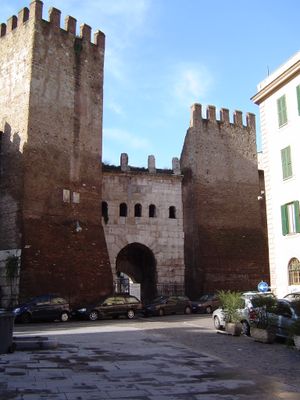
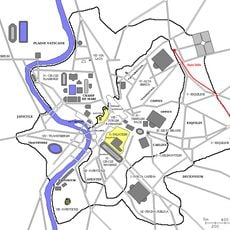
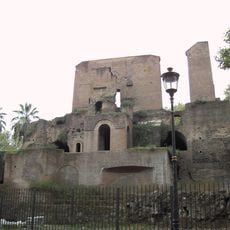
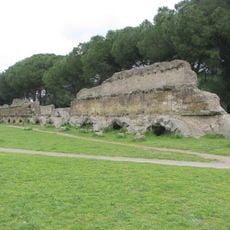
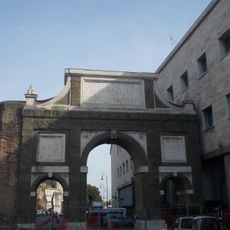
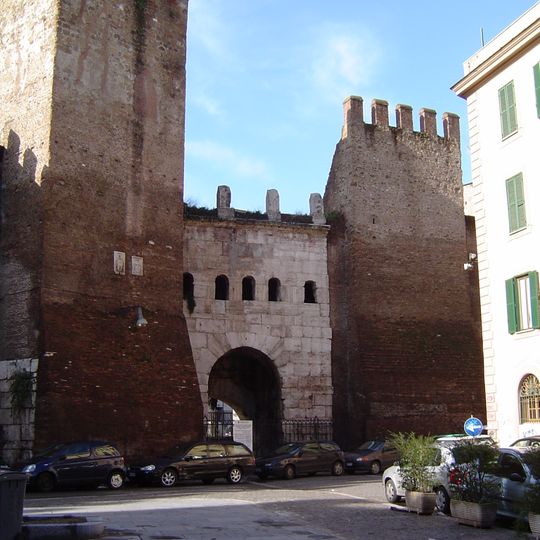
Porta Tiburtina is an ancient gate in eastern Rome, built as a bridge to carry three aqueducts over the Via Tiburtina road. It consists of a single stone arch made from large travertine blocks and was later built into the Aurelian Walls, which still flank it on both sides.
The structure was built under Emperor Augustus in the late 1st century BC to carry aqueducts across the road below. When Emperor Aurelian built his city walls in the 3rd century AD, the existing arch was incorporated into them and became one of the gates into Rome.
The gate still carries carved inscriptions naming the emperors who ordered repairs to the water channels, including Augustus, Titus, and Caracalla. These stone texts make the structure one of the few places in Rome where you can read a public record from ancient times simply by looking up at the stonework.
The gate stands directly on a busy road near Roma Tiburtina train station and can be reached on foot without difficulty. There is no enclosure or entry check, so it can be seen at any time from the street.
The gate was never originally designed as a city entrance at all but purely as a water bridge, and only became a passageway when the walls were built around it. This makes it one of the few Roman gates that started life as a piece of infrastructure rather than a defensive or ceremonial structure.
The community of curious travelers
AroundUs brings together thousands of curated places, local tips, and hidden gems, enriched daily by 91,357 contributors worldwide.