Arch of Sixtus V, Renaissance triumphal arch in Rome, Italy
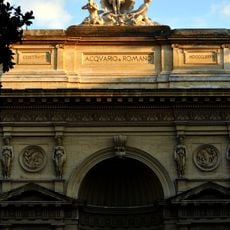
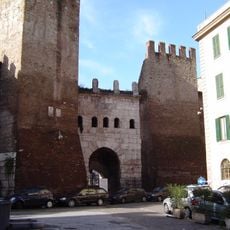
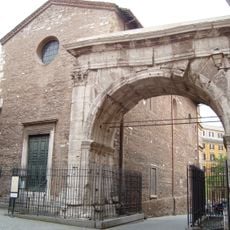
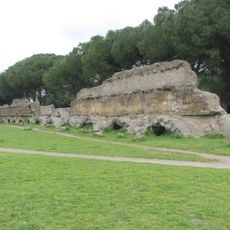
The Arch of Sixtus V is a triumphal arch with three barrel-vaulted passages, the central one wider, built of peperino stone with travertine decoration. It stands at the crossing of the old roads to Santa Maria Maggiore and Santa Maria degli Angeli, next to Porta San Lorenzo, and is built into the terminal stretch of the Acqua Felice aqueduct above the Aurelian Walls.
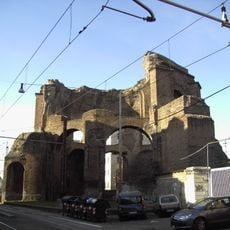
The aqueduct was commissioned by Gregory XIII for the pilgrims of the 1575 Jubilee and completed under Sixtus V, who had Giovanni Fontana design this arch, inaugurated in 1585, the first year of his pontificate. In the 19th century the building of Termini station required dismantling part of the aqueduct, but the arch was kept and now appears almost leaning against the station's rear.
The arch is also called Arco delle Pere because pears appear in Sixtus V's papal emblem, carved in travertine beside the two smaller arches. On both facades his symbols stand out: two stars flanking the main arch facing south-east, two stylized mountains on the north-west side, and a lion's head on each keystone.
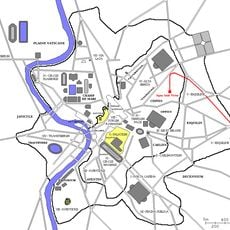
The monument stands at a major road intersection and serves as a helpful reference point for navigating Rome. The location is easy to reach since it sits in a central area of the city.
On the attic facing piazzale Sisto V, a plaque records that Sixtus V built the underground channel of the Acqua Felice for thirteen miles, on arched substructures for seven; the abbreviation MILL PASS on the inscriptions stands for milia passuum, the Roman mile of about 1482 m.
The community of curious travelers
AroundUs brings together thousands of curated places, local tips, and hidden gems, enriched daily by 93,695 contributors worldwide.