Horti Liciniani, Ancient Roman garden complex on Esquiline Hill, Rome, Italy
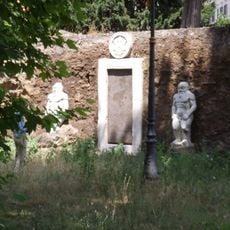
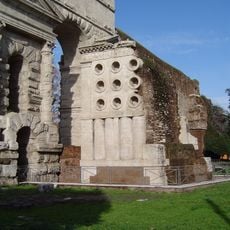
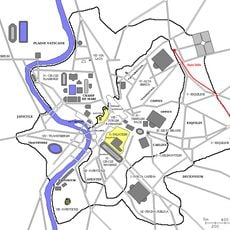
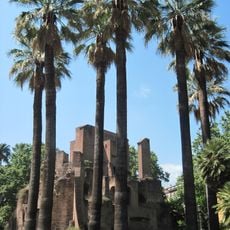
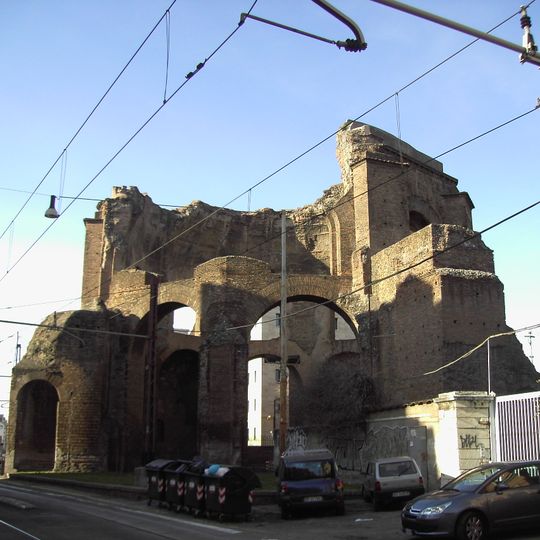
The Horti Liciniani are remains of an ancient Roman garden complex on the Esquiline Hill containing important archaeological finds and structural elements. A standout feature is a fourth-century nymphaeum with an unusual twelve-sided design and marble decoration on its walls and surfaces.
The garden complex was originally built and used by the wealthy Licinia family. In the third century it was transformed into an imperial residence under Emperor Gallienus, who made it the center of his court.
The name recalls the original owning family and their prominence in ancient Rome. Visitors walking through the remains can still sense how these gardens shaped the lifestyle of Rome's wealthy elite through elaborate water features and vegetation.
Many artifacts from the excavation site are displayed at the Museo Montemartini in Rome, where visitors can gain insight into the site's history. A large mosaic depicting hunting scenes discovered in 1904 demonstrates the artistic standards of the era.
Emperor Gallienus envisioned a colossal statue of himself as the Sun god at the highest point of the site, but this ambitious project was never realized. This abandoned dream reveals much about both his ambitions and the eventual decline of his reign in the late third century.
The community of curious travelers
AroundUs brings together thousands of curated places, local tips, and hidden gems, enriched daily by 91,778 contributors worldwide.