Tomb of Eurysaces the Baker, Ancient Roman funeral monument at Porta Maggiore, Italy
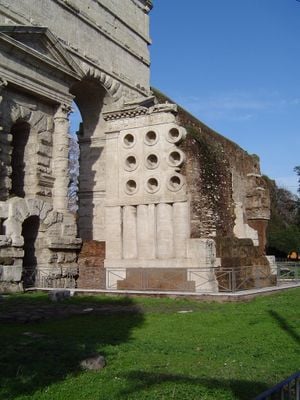
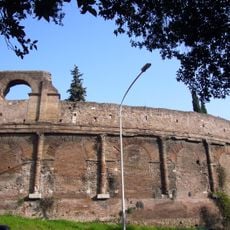
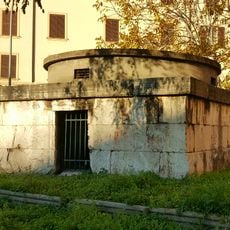
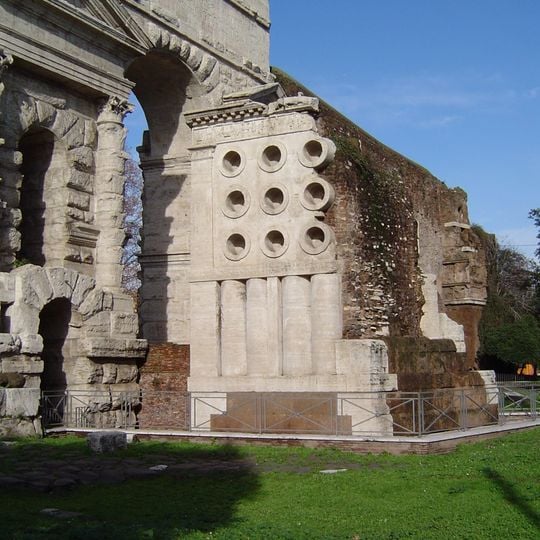
The Tomb of Eurysaces is an ancient Roman structure near Porta Maggiore in Rome, Italy. The trapezoidal construction displays three rows of cylindrical openings that evoke the kneading machines of Roman bakeries, while travertine blocks cover the outer walls.
The burial structure was created around 30 BCE as a memorial to a prosperous baker. For centuries it remained concealed inside medieval defensive towers until Pope Gregory XVI ordered their removal in 1838, bringing the monument back into view.
The friezes on the walls depict every stage of bread production, from grinding grain to finished loaves, offering insight into the profession of Marcus Vergilius Eurysaces. The carvings remind visitors that bakers in ancient Rome were important craftspeople who supplied large quantities of bread to the city's residents.
The monument stands at Piazzale Labicano, where Via Labicana and Via Prenestina meet, near several tram lines from Termini Station. Visitors can view the structure from the outside at any time, as it sits openly on a public square.
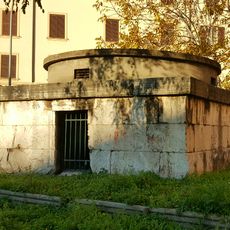
The burial urn of Atistia, wife of Eurysaces, takes the form of a bread basket and underscores the close link between the memorial and the baking trade. This unusual design shows how proud the family was of their profession and how they wished to honor it beyond death.
The community of curious travelers
AroundUs brings together thousands of curated places, local tips, and hidden gems, enriched daily by 92,137 contributors worldwide.