Santa Maria in Celsano, Gothic Revival church in Rome, Italy.
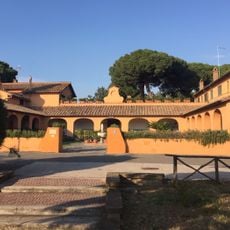
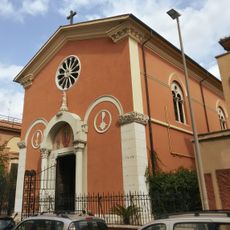
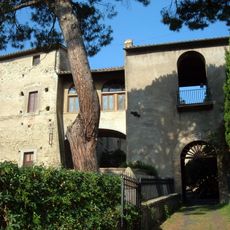
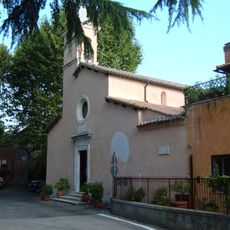
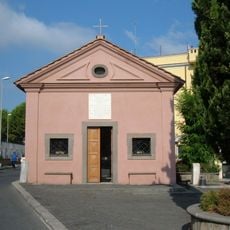
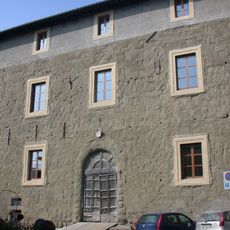
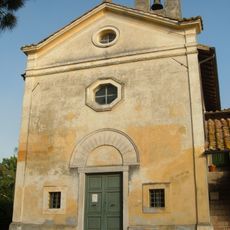
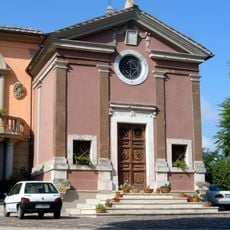
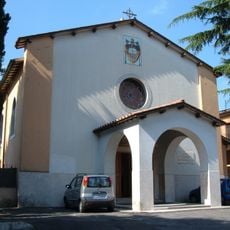
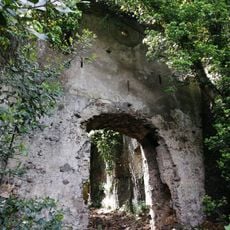
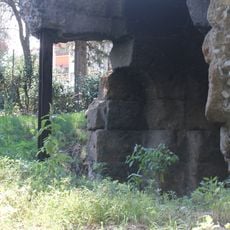
Santa Maria in Celsano is a church set into a farmhouse of the Roman countryside, almost hidden by the surrounding buildings and reached by a staircase. It stands on the remains of a Roman cistern. The facade has a pointed-arch portal topped by a rose window with plaster decoration; inside, three naves are divided by arches on low granite columns under a wooden ceiling, lit by six windows with 15th-century frescoes between them.
A church in the borgo of Santa Maria di Galeria is first documented in the 11th century, when the pope assigned it and the surrounding lands to the Roman monastery of San Saba. In 1433 it passed to the Orsini, who restored it in the early 16th century. Administration later went to the monastery of San Paolo eremita, then the Collegio Germanico-Ungarico, and to the Jesuits, who made it a parish seat in 1816. It is now a rettoria of Sant'Andrea Apostolo a Osteria Nuova in the diocese of Porto-Santa Rufina.
The name comes from a folk legend: the miraculous Madonna icon kept inside was said to be found on a mulberry tree (gelso), which became celso and then Celsano. Two frescoes in the church narrate the finding and the transport of the icon to this site; the second is attributed to the school of Antoniazzo Romano.
The church is reached by a staircase and sits inside a farmhouse of the Roman countryside, almost hidden by the surrounding buildings. It is a rectory of the parish of Sant'Andrea Apostolo in Osteria Nuova, so check locally when it is open before travelling out.
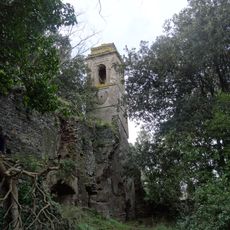
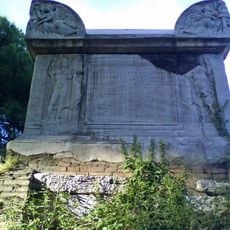
The church preserves two stone plaques from the old parish church of Sant'Andrea di Galeria, now a ruin among the remains of the abandoned town of Galeria. The main altar holds a 12th–13th-century icon of the Madonna and Child with saints, the image behind the mulberry-tree legend.
The community of curious travelers
AroundUs brings together thousands of curated places, local tips, and hidden gems, enriched daily by 92,798 contributors worldwide.