Dente Italiano, Mountain summit in Trambileno, Italy
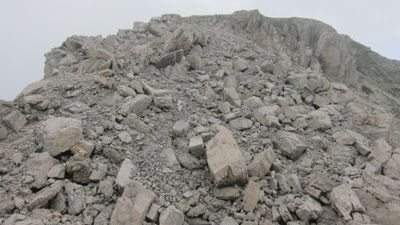
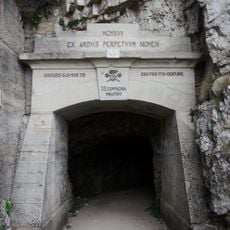
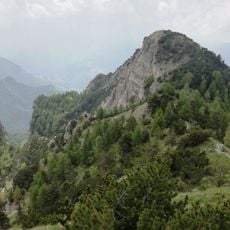
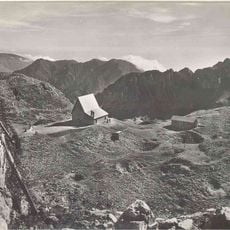
Dente Italiano is a 2,220 m summit on the Pasubio massif, the northern ridge extension of Cima Palon, separated from it by the roughly 20 m wide Selletta Damaggio at 2,175 m. Its plateau, about 30 m from the Austrian Dente across the Eselsrücken saddle, is torn by trenches, shell craters and tunnel entrances, and the rubble field at its northern tip marks the mine of 13 March 1918. The Ghersi walkway, restored for the war centenary, is a communication trench named after General Giovanni Ghersi, linking Selletta Damaggio with the Bombarde ridge and the Selletta del Comando near the Arco Romano.
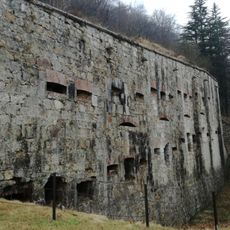
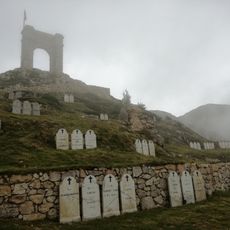
During World War I, the summit functioned as a strategic fortification where Italian and Austrian forces held opposing positions on this high mountain front. A massive explosion involving 50,000 kg of explosives in March 1918 caused permanent damage to the northern section during mine warfare operations.
The name dates from World War I: the Italian-held crest faced the Austro-Hungarian Dente Austriaco across the Eselsrücken, the 30 m saddle that was no man's land between the lines. The opposing names survive on maps and on the information boards installed for the war centenary.
The mountain is most accessible during summer months when snow clears from the routes and conditions allow safe travel. Sturdy footwear and preparation for variable mountain weather are essential regardless of which route you choose.
The Austrian mine of 13 March 1918, 50,000 kg of explosive in two chambers under the Italian Dente, was the largest of the mine war and brought down the northern tip of the summit. Loading the chambers alone took seven days, and the blast narrowly preceded an Italian mine due that same morning.
The community of curious travelers
AroundUs brings together thousands of curated places, local tips, and hidden gems, enriched daily by 94,238 contributors worldwide.