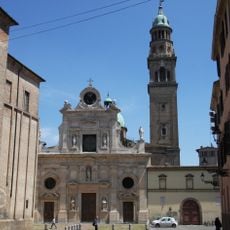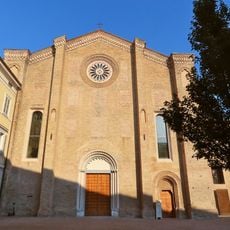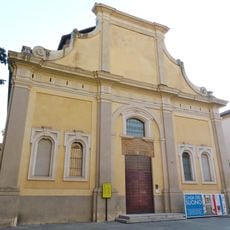
Frise de saint Jean à Parme, Renaissance fresco cycle in San Giovanni Evangelista, Parma, Italy
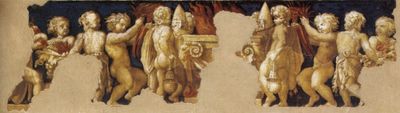
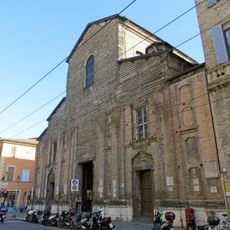
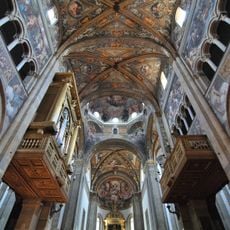
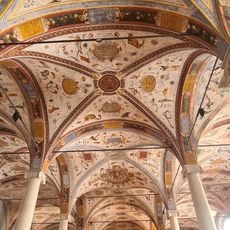
The Frieze of Saint John is a continuous band of frescoes running along the inner perimeter of the central nave and transept of San Giovanni Evangelista in Parma. Correggio designed it around 1522-1524, leaving much of the painting to assistants including the young Parmigianino. The scenes are monochrome on an intense blue ground, with touches of red, and perspective roundels hold busts of popes, cardinals and Benedictine monks.
Correggio designed the frieze around 1522-1524 while working on the abbey church of San Giovanni Evangelista, entrusting most of the painting to assistants, probably including Francesco Maria Rondani, while he concentrated on the dome and choir. The right transept section is attributed to Giovanni Antonio da Parma (1514), the left to an artist possibly trained in Padua. The young Parmigianino was among the collaborators.
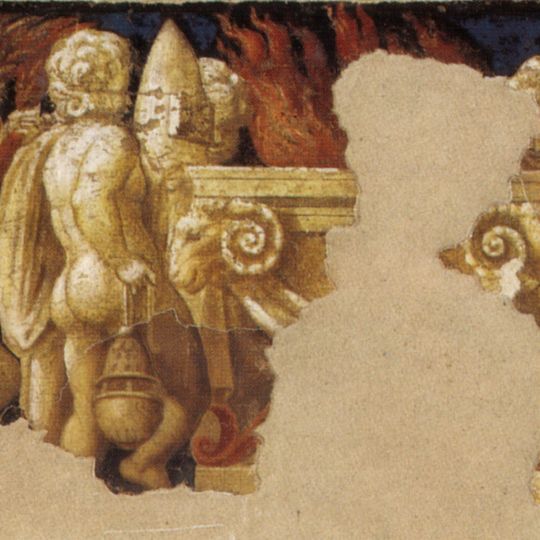
The frieze pairs Christian and pagan sacrifice: putti carry wheat to a burning altar, read as a parallel between the Mass and ancient rites. Giuseppe Maria Toscano interpreted the putti's symbols as a programme exalting the Mass as the fulfilment of all sacrifices. Roundels in perspective hold busts of popes, cardinals and Benedictine monks.
The frescoes can be viewed daily when visiting the church, and guided tours explain the artistic techniques and meanings in each scene. It helps to allow enough time to spot details high on the walls and in the vaults above.
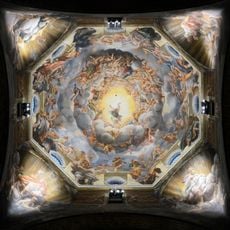
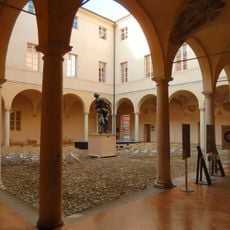
One section, the Sacrifice of Putti, was long hidden behind an organ; it was detached and is now kept in the church's own rooms. It shows children busy around a pagan altar with sacred fire, carrying ears of grain, their poses echoing the putti holding garlands in the dome's pendentives.
The community of curious travelers
AroundUs brings together thousands of curated places, local tips, and hidden gems, enriched daily by 92,785 contributors worldwide.