Monte Pizzuta, Mountain summit in Piana degli Albanesi, Sicily
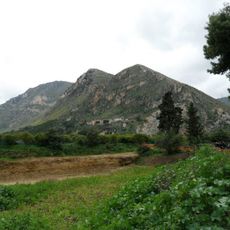
Monte Pizzuta is the highest peak of the Monti di Piana degli Albanesi, rising to 1,333 metres in the Serre della Pizzuta nature reserve. It is made of Mesozoic pelagic limestone, with holly trees near the summit and two caves on its eastern side: the horizontal Grotta del Garrone and the vertical Zubbione della Pizzuta, about 100 metres deep.
Until the early 1900s, farmers from Piana degli Albanesi, then Piana dei Greci, worked the snow pits (neviere) on the western slope in the coldest winter months. They packed snow into conical pits about 15 metres wide and 3 metres deep, covered it with straw, and carried the blocks by mule at night to Palermo, where it was scraped into a coarse granita called grattatella. Large ruins of the neviere remain near the summit.
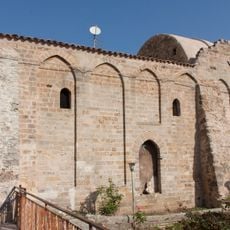
At the foot of the mountain, near the village, stands the rural church of the SS. Madonna dell'Odigitria, whose foundation chapters were drawn up in 1488. The Arbëreshë of Piana degli Albanesi, descendants of Albanian refugees settled after the Ottoman conquest, call the peak Mali i Picutës and say "Mali i Picutës na thërret" — Monte Pizzuta calls us.
The summit is reached on foot; the Sentiero Italia long-distance route crosses the mountain at Portella del Garrone. Snow and sub-zero temperatures are common in winter, and the top is often in cloud with strong winds from shifting directions. The eastern side holds the horizontal Grotta del Garrone and the vertical Zubbione della Pizzuta, a shaft about 100 metres deep.
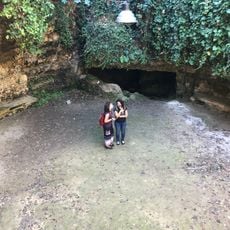
On the eastern slope, the Grotta del Garrone runs horizontally and holds two small lakes formed by dripping water, along with a bat colony. Nearby, the Zubbione della Pizzuta drops vertically for about 100 metres. The mountain is built of Mesozoic pelagic limestone, and karst corrosion by rainwater created these cavities.
The community of curious travelers
AroundUs brings together thousands of curated places, local tips, and hidden gems, enriched daily by 93,623 contributors worldwide.