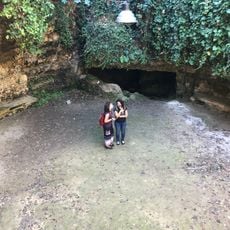
Villa Napoli, Historical villa in Palermo, Italy.
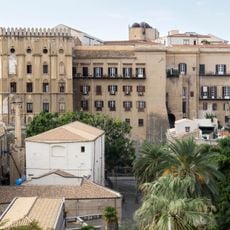
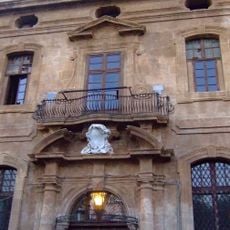
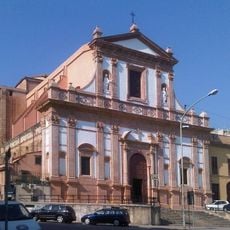
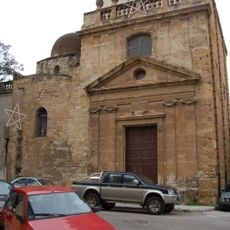
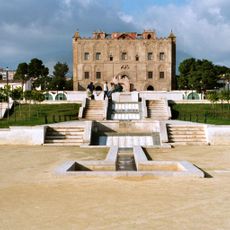
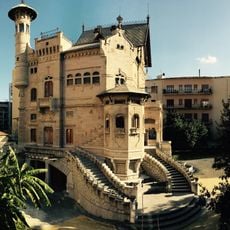
Villa Napoli is a residence in Palermo featuring a prominent outdoor staircase with two ramps leading to the main entrance. The property has two separate entrances, one on Via Michele Titone and another through the rear courtyard on Via Francesco Speciale.
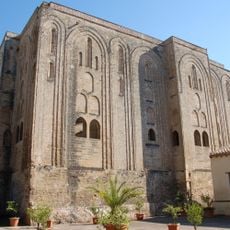
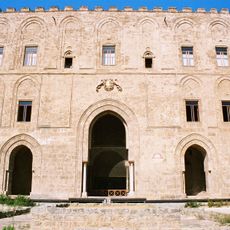
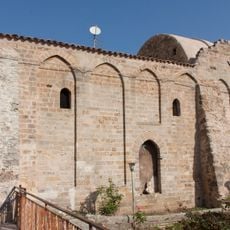
Villa Napoli incorporates the remains of the Cuba soprana, a Norman royal pavilion also called Torre Alfaina, whose walls and an arch are visible on the east front. The Ventimiglia built the Renaissance villa in the 16th century; it passed to the Rao and then, in 1730, to the jurist Carlo Di Napoli, who gave it its name. In 1991 the Napoli family sold it to the Sicilian Region, which began consolidation and restoration work.
The noble hall displays frescoes by artist Vito D'Anna, and a small chapel dedicated to Saint Rosalia stands inside the residence. These spaces reflect the religious devotion that was common in aristocratic villas.
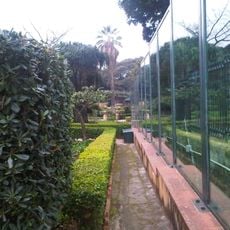
The villa stands on Corso Calatafimi in the Cuba-Calatafimi district, with one entrance on Via Michele Titone at the front and a second through the rear courtyard on Via Francesco Speciale. The building was closed awaiting reopening after restoration, so check access before planning a visit; the Cubula pavilion stands at the far end of the surviving garden strip, roughly 200 metres long and up to 100 metres wide.
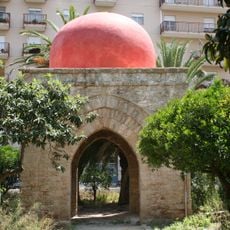
The Cubula, a small red-domed pavilion from around the 12th century, stands at the far end of the garden, several hundred metres from the villa. It is the last surviving pavilion of the Norman royal park of Genoardo, and the only part of the complex unchanged over the centuries.
The community of curious travelers
AroundUs brings together thousands of curated places, local tips, and hidden gems, enriched daily by 92,983 contributors worldwide.