Muro Torto, Ancient defensive wall section in northern Rome, Italy
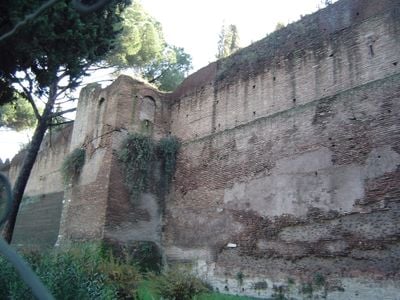
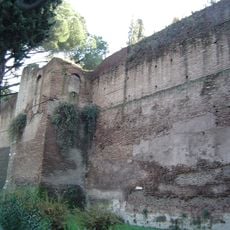
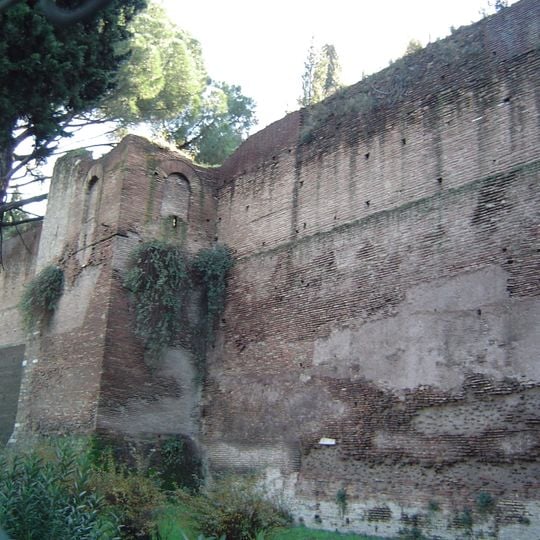
Muro Torto is a section of the ancient Aurelian Walls in northern Rome, extending between Via Veneto and Piazza del Popolo behind the Pincian Hill. The structure displays an unusual inclined form that runs along the hillside and is marked by its distinctive slanted profile.
The Muro Torto is a substruction wall from the late Roman Republic, built to hold up the slope where the Horti Pinciani and the villas of the Anicii, Acilii and Pinci stood. In the 3rd century it was incorporated into the Aurelian Walls. In papal Rome the ground beside it, also called contrada del muro malo, received suicides, thieves, vagabonds and prostitutes, and Angelo Targhini and Leonida Montanari were buried nearby.
The name Muro Torto means 'crooked wall', not 'twisted wall'. In papal Rome the ground beside it, called contrada del muro malo, was where suicides, thieves, vagabonds and prostitutes were buried; Angelo Targhini and Leonida Montanari were interred nearby. The wall now gives its name to viale del Muro Torto.
You can best explore this ancient wall on foot while walking from Villa Borghese gardens toward Piazza del Popolo or along the adjacent street. Access is free, and you should allow time to view the unusual structure from multiple angles.
In papal Rome the ground beside the wall was used to bury suicides, thieves, vagabonds and prostitutes, and the spot was known as the contrada del muro malo. Angelo Targhini and Leonida Montanari, executed in 1825, were buried here as well.
The community of curious travelers
AroundUs brings together thousands of curated places, local tips, and hidden gems, enriched daily by 92,782 contributors worldwide.