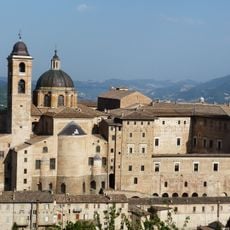
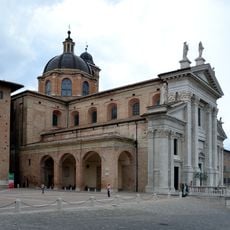
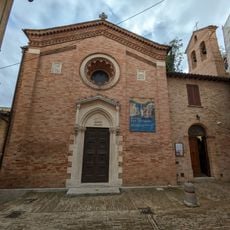
Palazzetto de Jole, Renaissance palace in Urbino, Italy.
Palazzetto de Jole is the 15th-century core of the Ducal Palace of Urbino, built from 1445 by Florentine architects led by Maso di Bartolomeo. It has three floors in a plain Tuscan style, with five marble twin windows on the facade facing Piazza Rinascimento, inspired by Palazzo Medici-Riccardi. Its seven rooms on the piano nobile belong to the Galleria Nazionale delle Marche.
Around 1445 Federico da Montefeltro had the two old ducal buildings joined by Florentine architects led by Maso di Bartolomeo, who built the intermediate Palazzetto de Jole. It was the first step in his plan, begun after he took power in 1444, to turn Urbino into a modern capital.
The palace takes its name from the mythological figure Jole, depicted on a fireplace carved by Michele di Giovanni da Fiesole. This representation remains visible today and reflects the patron's interest in classical stories.
The palace is situated in the heart of Urbino's historic center and is easily accessible on foot. Visitors should note that the rooms are now part of a museum setting, and viewing conditions may vary depending on the current displays.
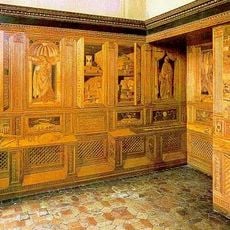
The alcove in these rooms, made by Giovanni da Camerino, is a rare surviving piece of 15th-century furniture. It furnished the apartment Federico da Montefeltro lived in before becoming duke, while his sumptuous residence was still being built on the opposite side of the palace.
The community of curious travelers
AroundUs brings together thousands of curated places, local tips, and hidden gems, enriched daily by 93,135 contributors worldwide.