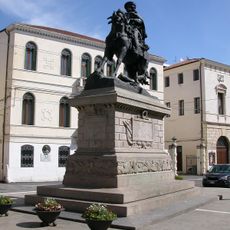
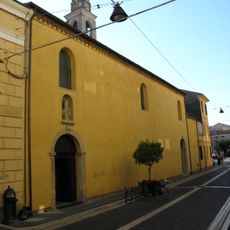
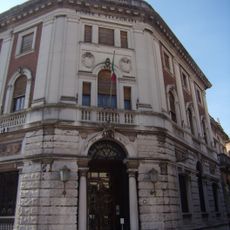
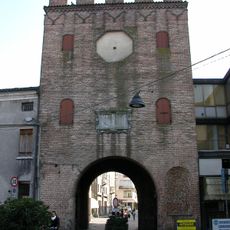
Palazzo Angeli, Neoclassical palace in central Rovigo, Italy
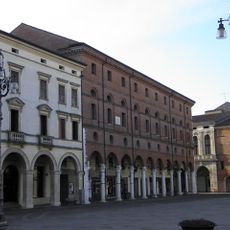
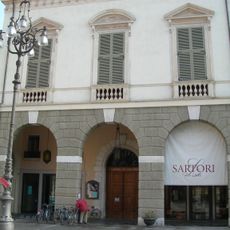
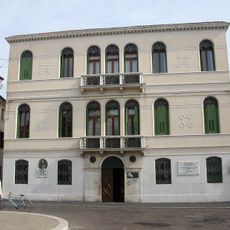
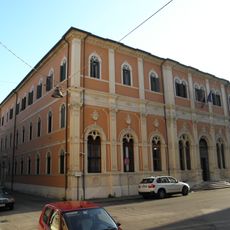
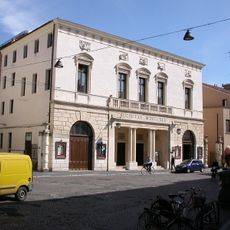
Palazzo Angeli is a Neoclassical palace in Rovigo, designed by Veronese architect Francesco Schiavi and completed in 1780 for Count Giovanni Battista Angeli. Its facade faces away from the current Corso del Popolo, as with other pre-20th-century buildings on the left bank of the Adigetto. Inside, frescoes by Venetian painter Giovanni Battista Canal, a nephew of Canaletto, decorate the ground-floor rooms and the main salon.
The palace was built in 1780 and marks the shift from ornate Baroque architecture to the clean principles of Neoclassicism. This change was part of a broader European movement inspired by ancient Roman and Greek forms.
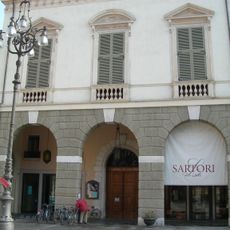
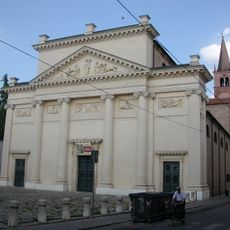
The building expresses how wealthy families of the 1700s valued order and reason in their surroundings, moving away from excessive decoration. You can see this shift in taste reflected in every detail of the front facade.
The palace is located in Rovigo's historical center and is easy to explore on foot while walking through the surrounding streets. The facade is fully visible from the street, and you can examine the architectural details from the sidewalk.
The building incorporates design elements inspired by archaeological discoveries from Pompeii and Herculaneum, showing the scientific approach to architecture of that era. This inspiration from ancient Roman excavations was unusual and groundbreaking in European architecture at the time.
The community of curious travelers
AroundUs brings together thousands of curated places, local tips, and hidden gems, enriched daily by 92,789 contributors worldwide.