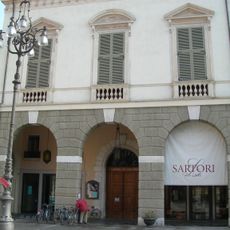
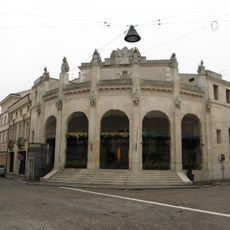
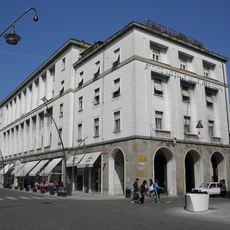
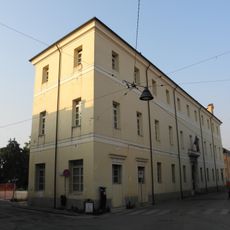
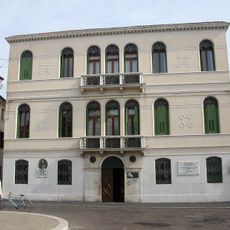
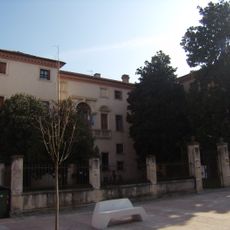
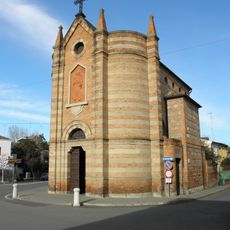
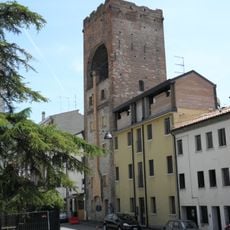
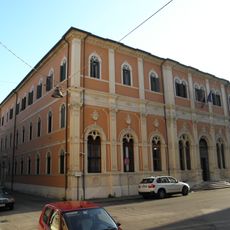
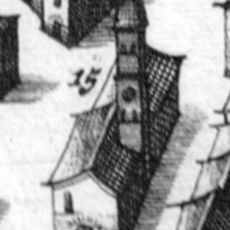
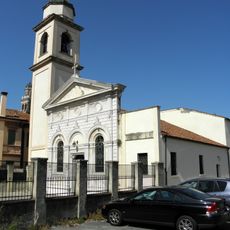
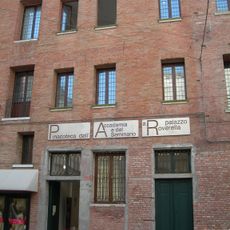
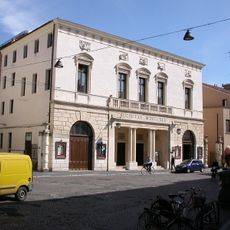
Palazzo Roverella, Renaissance palace in Rovigo, Italy
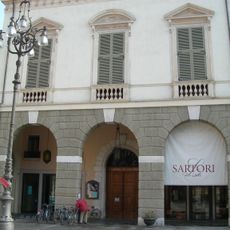
Palazzo Roverella is a Renaissance palace in Rovigo featuring a three-level structure of red brick accented with white marble columns along its main facade. Inside, several rooms display different architectural details and spatial arrangements that reflect the building's elegant design.
Cardinal Bartolomeo Roverella commissioned the palace in 1474 to display his family's standing; the architect is unknown, though Biagio Rossetti's ideas may have influenced the design. The cardinal died in 1477 and construction stopped. From the late 16th century the building was put to improper uses, prompting repeated internal alterations. Facade restoration began after World War II, and full renovation ran from 2000 under the Comune di Rovigo and the Fondazione Cassa di Risparmio di Padova e Rovigo.
The gallery grew from the Accademia dei Concordi, founded around 1580 by Count Gaspare Campo; in the 18th century it commissioned portraits of notable Rovigo citizens and Venetian protectors. The Casilini bequest of 1833 brought nearly two hundred Venetian works, followed by the Silvestri and Gobbetti legacies. Since 1982 the seminary's collection has been reunited here.
The building is located in Rovigo's old town and is easily reached on foot from other historical sights. Visitors should allow enough time to explore the exhibition, as the art collections are spread across multiple rooms.
The palace holds Egyptian antiquities donated by private citizens, among them the mummies of a woman and an infant known as Meryt and Baby, displayed with ushabti figurines. The same collection includes Greek and Roman vases and votive statuettes. The name of the architect who designed the building is not recorded.
The community of curious travelers
AroundUs brings together thousands of curated places, local tips, and hidden gems, enriched daily by 94,516 contributors worldwide.