Palazzo Bellomo Museum, Art museum in Syracuse, Italy.
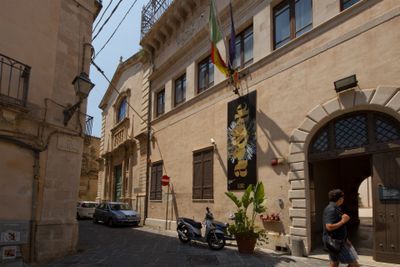
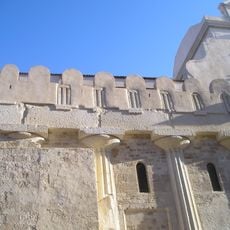
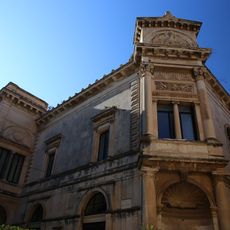
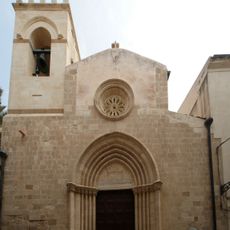
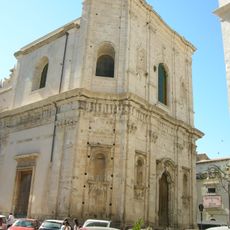
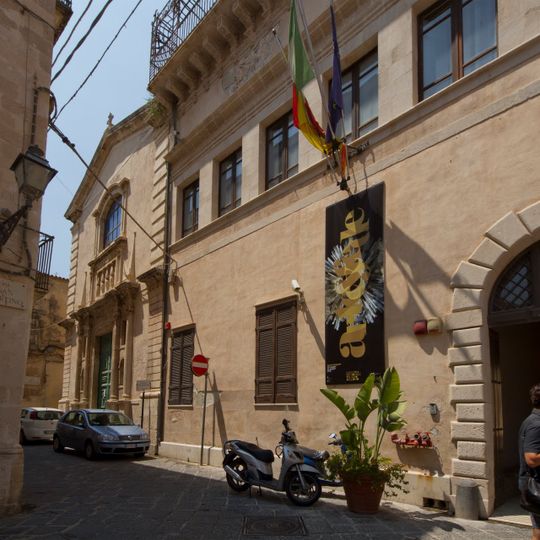
Palazzo Bellomo Museum is an art museum housed in a medieval palace in the historic center of Syracuse, Sicily. The building has a stone facade with a pointed portal and narrow windows, and the collection is spread across several floors connected by stone staircases.
The palace's origins trace to the 12th century under Hohenstaufen rule, and its main facade, basement and ground floor keep that appearance. In 1365 it passed to the Bellomo, a Roman noble family arrived in Sicily with Frederick III of Aragon, who raised the upper floor in Catalan Gothic style. In 1722 the nuns of the adjoining San Benedetto monastery bought it as a warehouse and dormitory; expropriated in 1866, it was ceded to the Belle Arti in 1901 and became a museum in 1948, reopening after restoration on 17 October 2009.
The collection comes from churches and monasteries of the Syracuse area, with pieces dated from around AD 400 to the present day. The best-known work is Antonello da Messina's damaged Annunciation of 1474. Two sarcophagi belong to Giovanni Çabastida and Giovanni Cardenas, governors of the Camera Reginale. In the courtyard stand the coats of arms of the vanished Porta Ligny, along with ceramics.
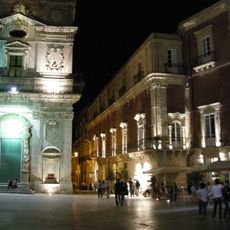
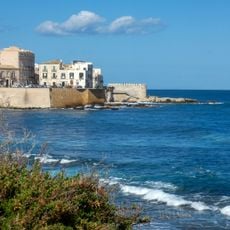
The museum is located in the heart of Ortigia, the historic island center of Syracuse, and is easy to reach on foot from most other sites nearby. A morning visit tends to give the best natural light inside the stone rooms, especially on the upper floors.
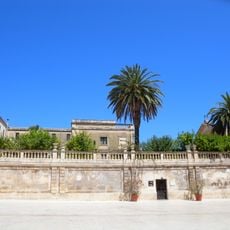
The inner courtyard, known as Cortile delle Palme, displays carved marble coats of arms that place the symbols of the city government, the church, and the Spanish viceroys side by side on the same wall. This makes the courtyard one of the few places where you can read three different layers of power in a single glance.
The community of curious travelers
AroundUs brings together thousands of curated places, local tips, and hidden gems, enriched daily by 92,947 contributors worldwide.