Museum of Human Anatomy Luigi Rolando, Human anatomy museum in San Salvario, Turin, Italy
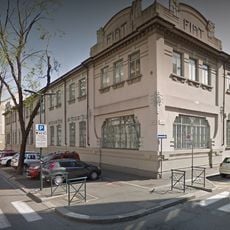
The Museum of Human Anatomy Luigi Rolando is a university anatomy museum in Turin's San Salvario district, housed since 1898 in the Palazzo degli Istituti Anatomici. Its rooms hold anatomical preparations, anthropological and phrenological collections, primates, period instruments, a library and a photographic archive, plus 200 human wax models.
Anatomy teaching in Turin dates to 1563, when the scholar Angelo Visca arrived from Savona. The first collection of anatomical preparations was commissioned in 1739 by Carlo Emanuele III from Giovanni Battista Bianchi for the forming University Museum. In 1830 Luigi Rolando expanded the collection and opened it to the public; from 1837 to 1898 Carlo Giacomini added alcohol-preserved and dry specimens, and Darwinian theory drove the growth of anthropological and primatological collections. The museum moved to the Palazzo degli Istituti Anatomici in 1898.
The collection shows how people once understood the human body through wax figures and preserved specimens. Visitors can observe how medical knowledge and teaching methods evolved over centuries.
The museum occupies the Palazzo degli Istituti Anatomici in the San Salvario district, south of Turin's centre, and belongs to the University of Turin museum network. It is reached by public transport toward San Salvario; check the university museum network's opening times before travelling, as access follows university arrangements.
Among the collections are 200 human wax models, alongside anthropological, phrenological and primatological series and period instruments. The museum also holds a library and a documentary and photographic archive, resources that grew from the teaching collections of the University of Turin.
The community of curious travelers
AroundUs brings together thousands of curated places, local tips, and hidden gems, enriched daily by 93,022 contributors worldwide.