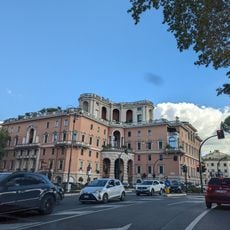
Palazzo Borromeo, Renaissance palazzo on Via Flaminia, Rome, Italy
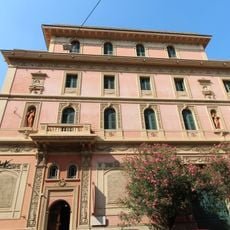
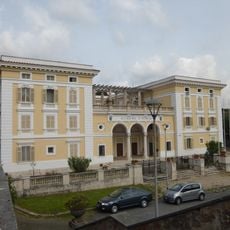
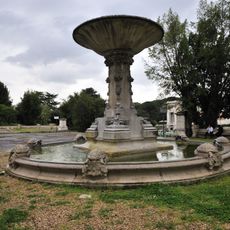
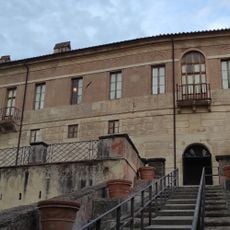
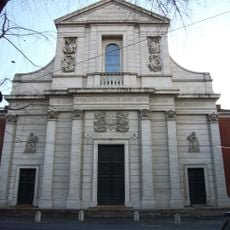
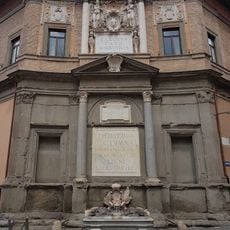
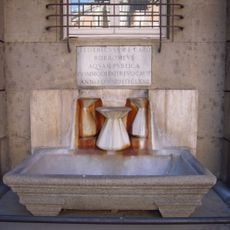
Palazzo Borromeo, also called Palazzina di Pio IV, stands along Via Flaminia with its entrance on Via delle Belle Arti. Pirro Ligorio designed it in 1561 as a Renaissance palace for Pope Pius IV, built against and incorporating the earlier Fontana di Papa Giulio III by Bartolomeo Ammannati, which still faces the corner of Via Flaminia and Via di Villa Giulia. Inside are stuccoes and frescoes commissioned by Pius IV and Marcantonio Colonna.
Pirro Ligorio designed the palazzo in 1561 for Pope Pius IV, who gave the unfinished building to his nephews Federico and Carlo Borromeo. After Federico's early death and Carlo's move to Milan it passed to their sister Anna, who married Fabrizio Colonna. In 1929, after the Lateran Pacts, the Italian state bought it as its embassy to the Holy See.
The name comes from the Borromeo family: Pius IV gave the unfinished building to his nephews Federico and Carlo Borromeo, and it later passed through Anna Borromeo to the Colonna. Inside are stuccoes and frescoes commissioned by Pius IV and Marcantonio Colonna. Since 1929 it has housed the Italian embassy to the Holy See.
The palazzo stands along Via Flaminia, with its entrance on Via delle Belle Arti, near the junction with Via di Villa Giulia where the Ammannati fountain faces the street. It is the seat of the Italian embassy to the Holy See, so the interiors are not open to visitors; the exterior and the incorporated fountain can be seen from the public street.
The palazzo is the only embassy in the world without extraterritoriality: since 1929 it has housed Italy's embassy to the Holy See, a diplomatic mission located on Italian soil. It is also the only case of a diplomatic seat detached within the territory of the country it represents.
The community of curious travelers
AroundUs brings together thousands of curated places, local tips, and hidden gems, enriched daily by 93,944 contributors worldwide.