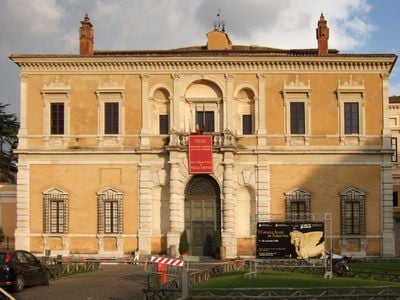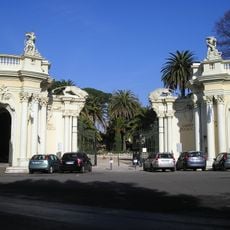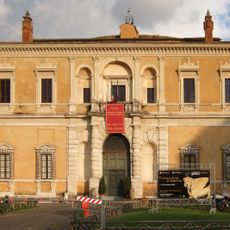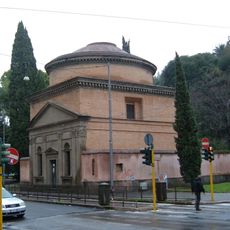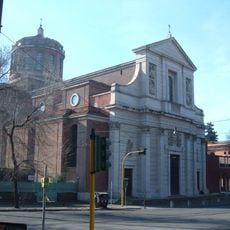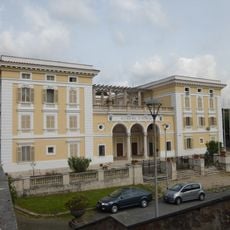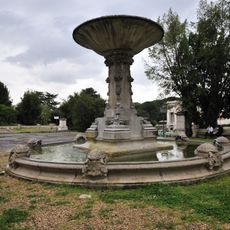
Villa Giulia, Renaissance villa in Flaminio, Rome, Italy
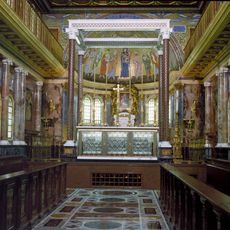
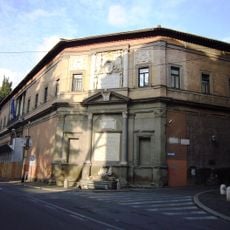
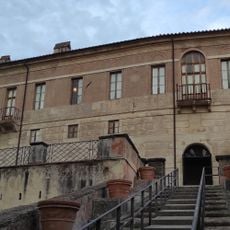
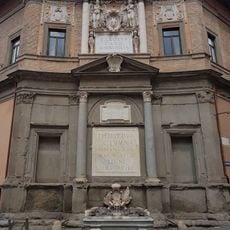
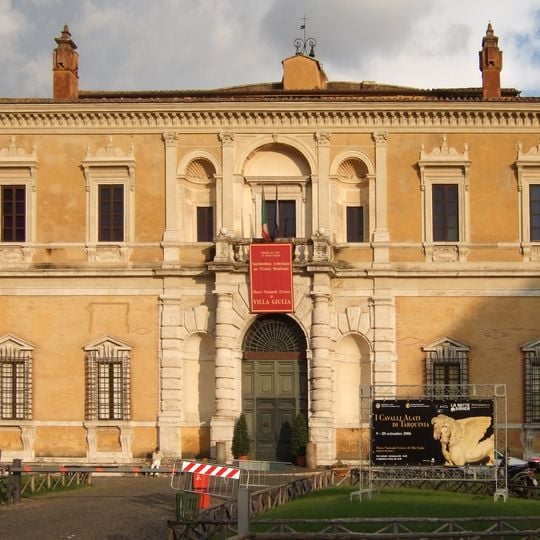
Villa Giulia is a Mannerist building in the Flaminio district of Rome that comprises a sequence of three connected courtyards. The complex features a semicircular loggia and elaborate marble staircases that descend to a two-story nymphaeum.
Pope Julius III commissioned the construction of this residence in 1551 and selected Giacomo Barozzi da Vignola and Bartolomeo Ammannati as architects. Work was abandoned after the pope's death in 1555, leaving some planned sections incomplete.
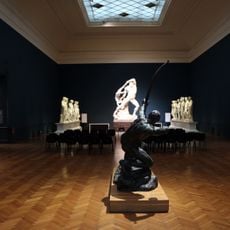
The building takes its name from Pope Julius III, who wanted a retreat beyond the city walls. Today it houses the Museo Nazionale Etrusco, where visitors walk through rooms filled with sarcophagi, wall paintings, and objects from everyday Etruscan life.
The nearest tram stop is called Flaminio-Belle Arti and sits around 500 meters (about 1650 feet) from the entrance. Visitors should allow time for both floors of the museum, as rooms spread across several wings.
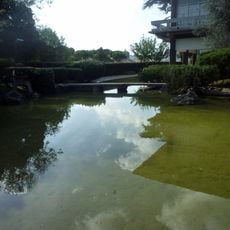
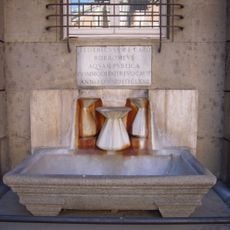
A sophisticated water system connects the complex to the ancient Acqua Vergine aqueduct, which also supplies the Trevi Fountain. The original water features in the nymphaeum operated without pumps, relying only on the natural gradient of the conduit.
The community of curious travelers
AroundUs brings together thousands of curated places, local tips, and hidden gems, enriched daily by 60,000 contributors worldwide.