Palazzo Capuano, palace in Portici, Italy
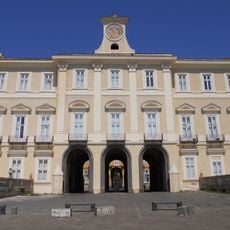
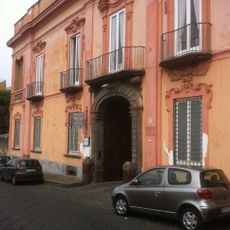
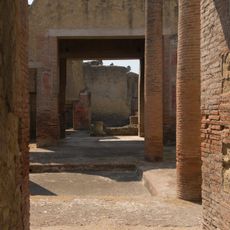
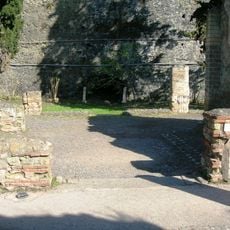
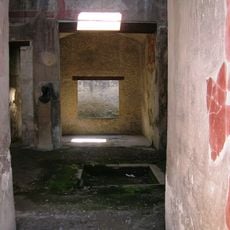
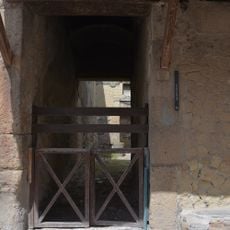
Palazzo Capuano stands at Piazza San Ciro 17 as Portici's oldest historic building. Its surviving medieval core is a tower, once separate from the rest, with 16th-century fortification works; the entrance hall keeps sail vaults and piperno stone door jambs. The 1948 opening of via della Libertà cut away the central block, isolating the tower from the remaining wings.
Palazzo Capuano's foundation is traditionally dated to 1025, when the Neapolitan noble Gualtiero Galeota had it built; in the 16th century it passed to the princes of Stigliano. Anna Carafa, duchess of Medina de las Torres and vicereine of Naples, was born there in 1605 and died there in 1644. In 1948 the central part was demolished to open via della Libertà, destroying frescoes by Belisario Corenzio.
The building is also called "Palazzo della regina Giovanna" and "Comune vecchia", because it housed the town hall and earlier the Segreteria di Stato and the Regia Pretura. A local legend links its tower to trapdoors through which Queen Joanna II of Naples is said to have dropped her lovers.
The palace stands at Piazza San Ciro 17, on the square of the same name in central Portici. The 1948 opening of Via della Libertà cut through the building, so the surviving tower is now separated from the rest of the structure; look for the piperno stone door jambs and the sail vaults of the entrance hall.
The palace once had an extensive garden with many fountains and water features, fed by an abundant water supply that also served the courtyards and apartments. The 16th-century tower and the sail vaults of the entrance hall survive from the older complex; the central section was demolished in 1948 to open Via della Libertà, isolating the tower.
The community of curious travelers
AroundUs brings together thousands of curated places, local tips, and hidden gems, enriched daily by 92,784 contributors worldwide.