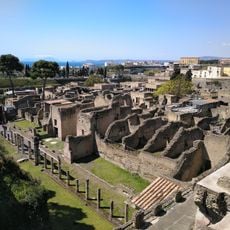
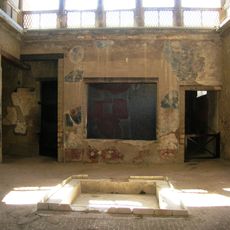
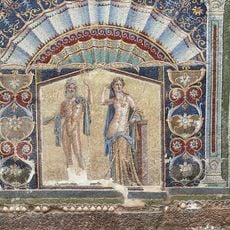
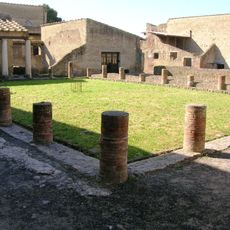
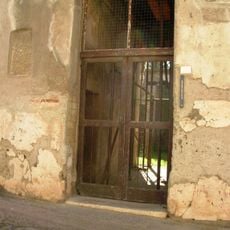
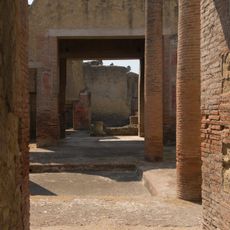
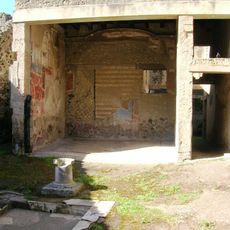
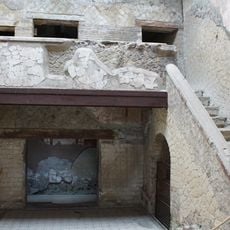
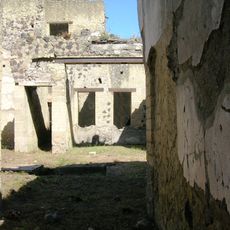
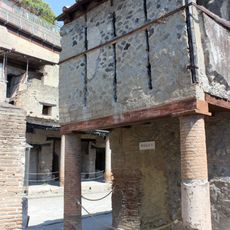
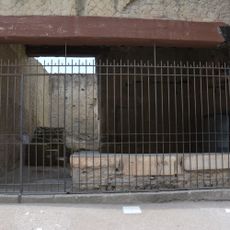
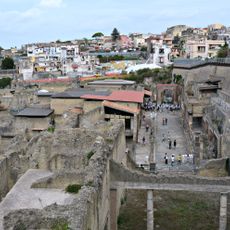
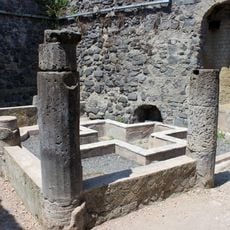
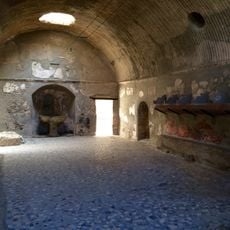
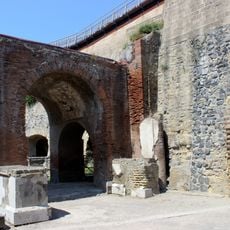
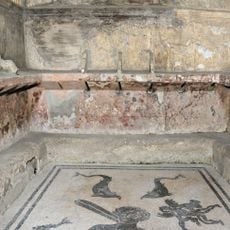
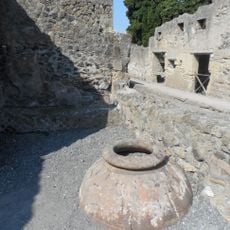
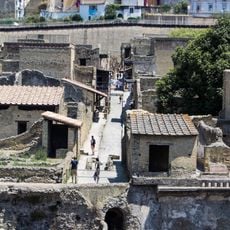
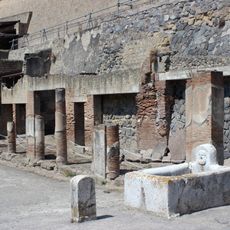
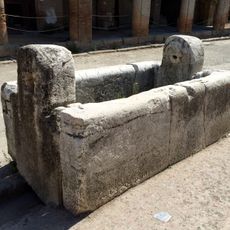
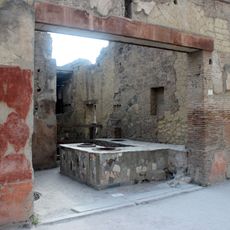
Augusteum, so-called Basilica, Roman civil basilica in Ercolano, Italy.
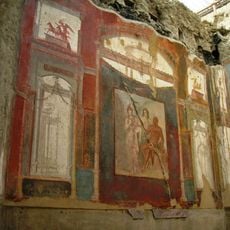
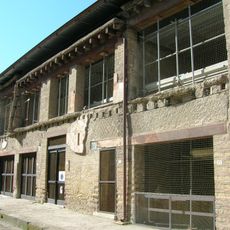
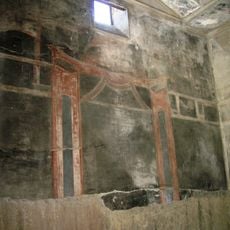
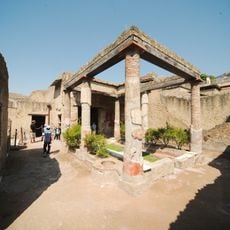
The Augusteum, also called the Basilica, is a Roman civil basilica in Ercolano known from a 1754 drawing by Charles-Nicolas Cochin: it measured 60 by 40 metres, had five entrances and a plan similar to the Building of Eumachia in Pompeii. Only the entrance portico, the chalcidicum, has been excavated; it faces the decumanus maximus and has a four-sided arch with fourth-style stucco decoration, including a reclining satyr. Inside, two rows of brick columns faced with stucco and a third at the rear divided the hall into a marble-paved central nave and two narrower side aisles paved in opus sectile with polychrome marbles.
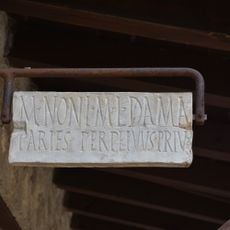
Built in the Julio-Claudian period of the 1st century BC, the basilica was damaged by the earthquake of 62 AD and restored at the behest of Emperor Vespasian. The pyroclastic flows of 79 AD buried it under a thick layer of mud. Bourbon explorers reached it through tunnels in the 18th century, and an inscription naming its builder, Marcus Nonius Balbus, identified it as a basilica.
The building housed numerous statues of imperial family members, showing how important it was to display the power of rulers in public spaces. These works served to emphasize the connection between the city and Rome.
A visit requires time to thoroughly explore the different areas and view the preserved paintings carefully. It is advisable to check local information about current accessibility, as archaeological sites can change regarding their opening status.
Archaeological excavations from the 18th century revealed numerous bronze and marble statues through a tunnel system beneath the building. These works are now displayed at the Archaeological Museum of Naples and offer insight into the artistic standards of the period.
The community of curious travelers
AroundUs brings together thousands of curated places, local tips, and hidden gems, enriched daily by 94,452 contributors worldwide.