Palazzo Sacchetti, Renaissance palazzo in Via Giulia, Rome, Italy
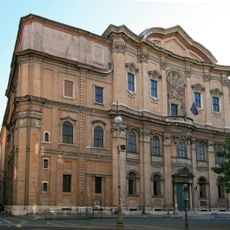
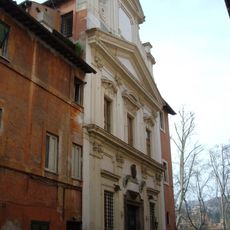
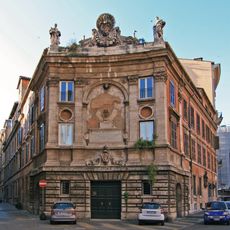
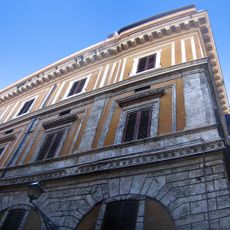
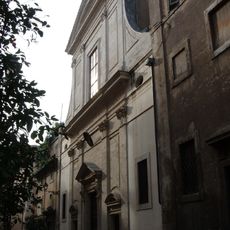
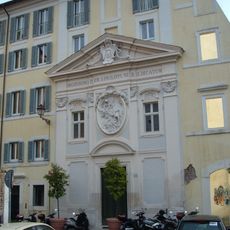
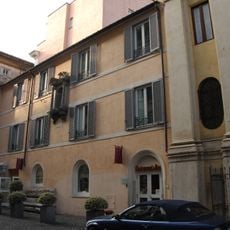
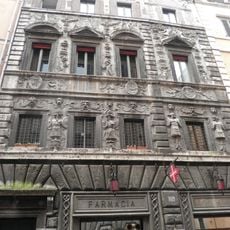
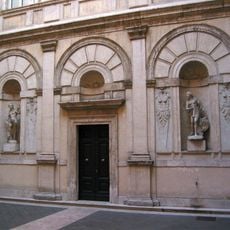
Palazzo Sacchetti at 66 Via Giulia is a late-Renaissance palace begun by Antonio da Sangallo the Younger, with brick façades and travertine-framed windows. The ground floor has six kneeling windows with iron grilles; the piano nobile has seven, the central one lengthened for a bronze-balustraded balcony. The marble portal on Via Giulia sits beneath that balcony, and the façade still carries Sangallo's 1543 ownership plaque and the chiselled Farnese coat of arms.
Antonio da Sangallo the Younger started construction in 1542, with architects Nanni di Baccio Bigio and Annibale Lippi continuing the work afterwards. The artist Francesco Salviati later contributed to the interior through elaborate fresco paintings that enhanced the building's decoration.
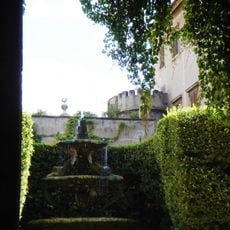
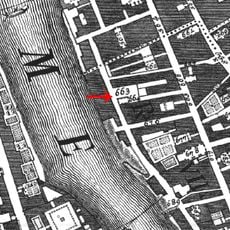
The palace's name comes from the Sacchetti family, Florentine nobles who bought it in 1649 from the Acquaviva and kept it until 2015. Cardinal Giulio Cesare Sacchetti had Carlo Rainaldi alter the rear and build stairs down to the Tiber. The alley on the south side, Vicolo del Cefalo, takes its name from the Ceuli family, corrupted into Cefalo, meaning mullet.
The palace is a private residence and not open to the public; the piano nobile was sold in 2015 and later offered for sale by Sotheby's. Visitors can view the exterior on Via Giulia, including the marble portal, the balcony with bronze balusters, and the chiselled Farnese coat of arms above a window.
The palace held almost 700 paintings assembled by Cardinal Giulio Cesare Sacchetti; his heirs sold them in 1748 to Pope Benedict XIV, forming the original core of the Capitoline Picture Gallery. The frescoes by Francesco Salviati, painted 1552–1554, depict the Stories of David.
The community of curious travelers
AroundUs brings together thousands of curated places, local tips, and hidden gems, enriched daily by 94,141 contributors worldwide.