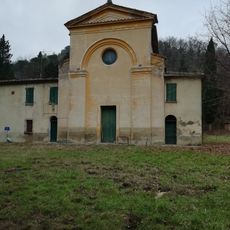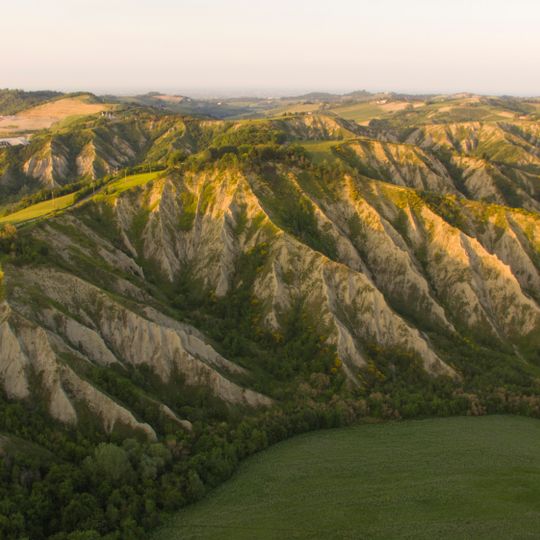
Parco regionale della Vena del Gesso Romagnola, Regional park with gypsum formations in Bologna and Ravenna, Italy.
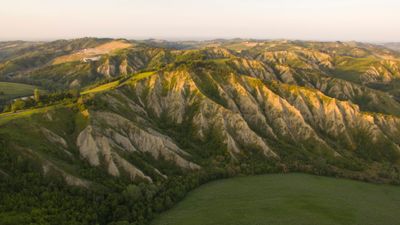
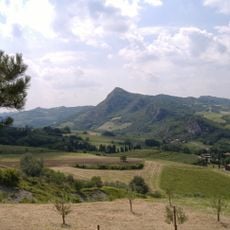
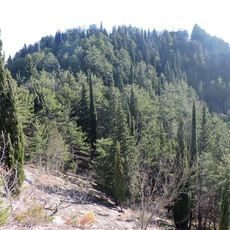
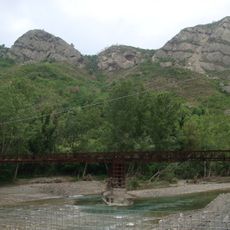
The Parco Regionale della Vena del Gesso Romagnola is a protected regional park situated across the Metropolitan City of Bologna and the Province of Ravenna, in Emilia-Romagna. It follows a narrow ridge of gypsum rock that cuts through the hills between the Sillaro and Lamone valleys, forming a gray-white band visible from a distance.
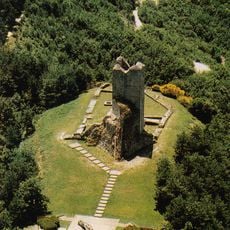
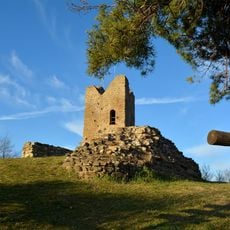
The park was officially established in 2005 to protect its geological formations and the archaeological remains found within the area. Signs of human presence here go back to prehistoric times, long before the modern boundaries of the protected area were drawn.
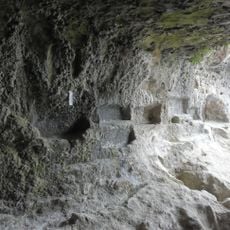
The park's name comes from the vena, the gray-white gypsum band that locals long quarried for chalk and building stone. Giuseppe Scarabelli dug at the Grotta del Re Tiberio around 1860, one of Italy's first stratigraphic excavations, and the finds opened study of how people used these caves. Pietro Zangheri, a naturalist from Forlì, published his flora survey of the gypsum belt in 1936 and pressed for protection of its habitats.
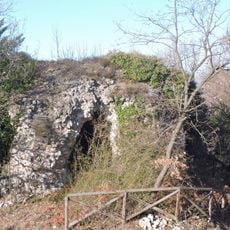
The park is managed by the Ente di gestione per i Parchi e la Biodiversità - Romagna, and its gypsum ridge runs between the Sillaro and Lamone valleys, with access points near Riolo Terme, Casola Valsenio and Brisighella. The protected area covers over two thousand hectares, so plan which sector to visit before setting out. The Re Tiberio cave, explored by Giuseppe Scarabelli, is among the best-known underground sites.
Beneath the park lies Italy's largest gypsum karst system, with caves, sinkholes, and underground streams carved out by water dissolving the rock over thousands of years. Some of these caves show traces of prehistoric habitation, making them important sites for archaeology as well as geology.
The community of curious travelers
AroundUs brings together thousands of curated places, local tips, and hidden gems, enriched daily by 94,671 contributors worldwide.