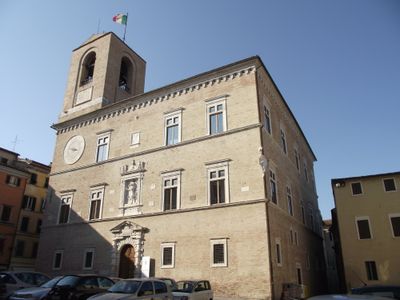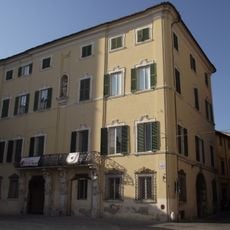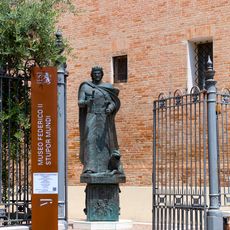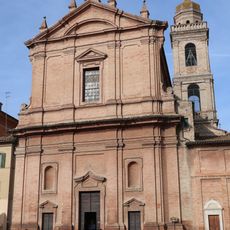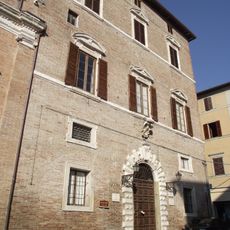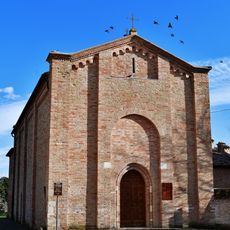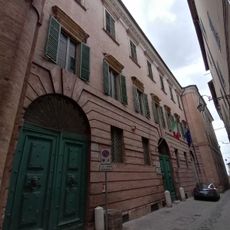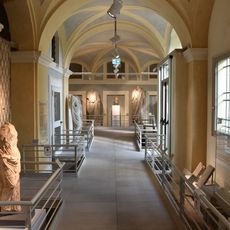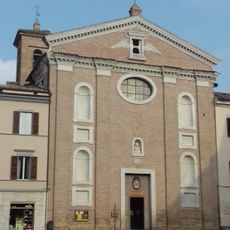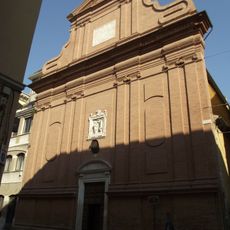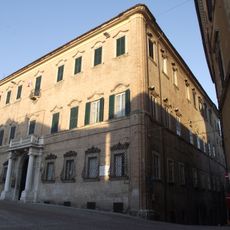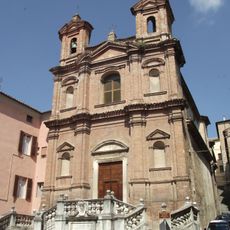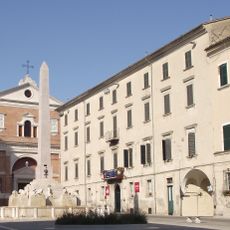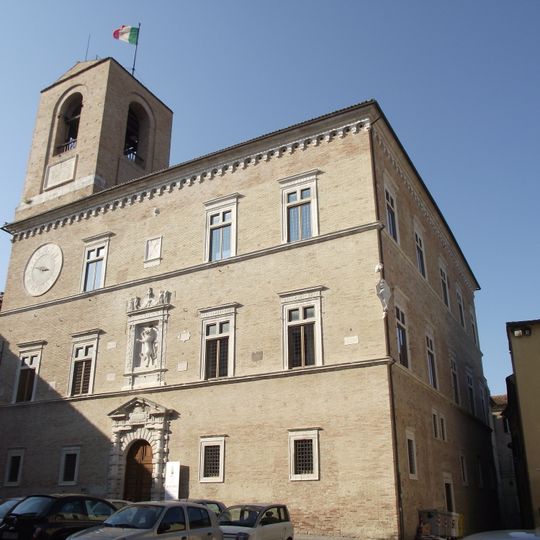
Palazzo della Signoria, Renaissance palace in Iesi, Italy.
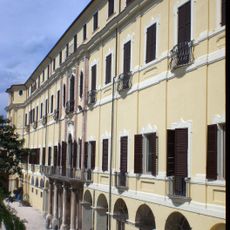
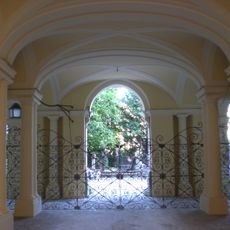
Palazzo della Signoria is a palace with clear lines and balanced proportions organized around an inner courtyard. Its exterior shows regularly spaced windows and carefully crafted stone facades typical of major civic residences from this era.
Built between 1486 and 1498 to a design by the Sienese architect Francesco di Giorgio Martini, the palace replaced the medieval Palazzo dei Priori and rose on foundations of the ancient Roman theatre. It housed the Gonfaloniere and the Priors until 1586, when it passed to the Papal Magistrate and became the Governor's Palace until Italian unification. After 1860 it held the magistrate's court, notarial archives and district prisons.
The marble slab on the ground floor, placed by order of Pope Alexander VI, shows the official measures of the "Respubblica Aesina": lines for the canna and the passo and a trapezium for measuring tiles and bricks. The Latin inscription under the lion relief reads that King Aesis granted the emblem, Emperor Frederick II crowned it and the Republic set it up under Pope Alexander VI.
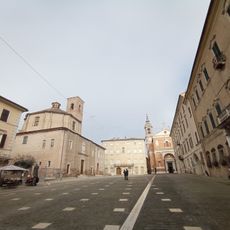
The building sits directly on Jesi's central square and is easy to locate as a reference point. Plan enough time to explore both the exterior and the interior rooms.
The courtyard's first loggia level was designed by Andrea Sansovino, called to Jesi in July 1519; its Istrian stone columns with Corinthian capitals carry cross vaults once covered by 16th-century frescoes, perhaps by Pietro Paolo Agabiti, of which only fragments remain. The upper loggia was never finished and still rests on oak wooden posts.
The community of curious travelers
AroundUs brings together thousands of curated places, local tips, and hidden gems, enriched daily by 92,990 contributors worldwide.