Palazzo Dudley, Renaissance palazzo in Florence, Italy
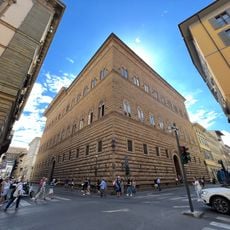
Palazzo Dudley is a Renaissance building in Florence featuring two entrance portals, an ornate balcony, and coffered wooden ceilings throughout its interior spaces. Traditional Italian craftsmanship is evident in each of these details and shapes the character of the structure.
The palazzo was built from 1578 to 1584 for Orazio Rucellai to a design by Bartolomeo Ammannati, on the acute wedge between Via della Vigna Nuova and Via della Spada. In 1614 the Rucellai sold it to the Englishman Robert Dudley, count of Warwick and duke of Northumberland, who governed the port of Livorno for the Medici and probably altered the structure. In 1912 the embroiderer Francesco Navone bought it and had Adolfo Coppedè cut back the narrow spur, adding the loggia and balustraded terrace.
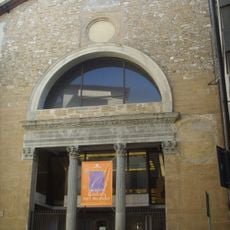
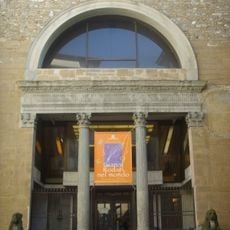
The wedge-shaped corner was cut back in 1912 by architect Adolfo Coppedè for embroiderer Francesco Navone, who won the 1913 Martelli Prize for the work. The Rucellai coat of arms was moved above the niche, and the inscription "F. Navone" remains on the portal architrave. A plaque placed in 1895 by Temple Leader recalls Robert Dudley's residence.
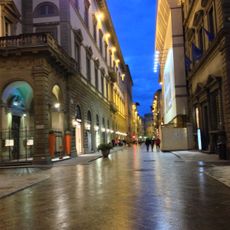
The building is located on Via Della Spada in central Florence and is easy to reach on foot. A store now occupies the ground floor, but the historic features of the facade and some original interior details remain visible from outside and during brief visits.
Robert Dudley was the illegitimate son of Elizabeth I's favourite, the Earl of Leicester, and left England for political reasons. In Florence he directed the port of Livorno and built the Molo Mediceo (1608) and the Arsenal of San Rocco. He bought this palace from the Rucellai in 1614, not 1613, and was buried in nearby San Pancrazio.
The community of curious travelers
AroundUs brings together thousands of curated places, local tips, and hidden gems, enriched daily by 92,869 contributors worldwide.