Porta a Mare, City gate in northwestern Pisa, Italy.
Porta a Mare is a stone gateway in the western fortifications of Pisa, built with arched passages and solid masonry typical of medieval defensive structures. The structure served as an entrance point through the city walls and formed part of the defense system that protected the urban center.
The gate was built in medieval times as part of Pisa's fortified walls and controlled access to the river that ran through the city. Its existence is linked to the period when Pisa was a major trading power with maritime connections across the Mediterranean.
The marble tabernacle of the 18th century holds the Madonna dei Navicellai, attributed to the painter-sculptor Tempesti, perhaps by Ferretti. It was venerated by the navicellai, the boatmen who carried sand along the Navicelli canal to the Saint-Gobain glassworks. The canal's urban stretch is now buried and diverted north to the Arno.
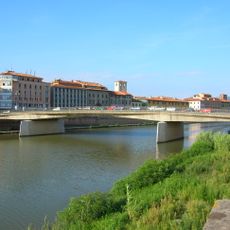
The gate stands next to the busy Ponte della Cittadella, on the route of the Via Aurelia through the Porta a Mare district. The urban stretch of the Navicelli canal is now buried and diverted north to the Arno, so the gate no longer faces open water. A plaque near the gate commemorates the Allied bombing of 31 August 1943.
The name comes from Pisa's connection to the Arno River, which once linked the city directly to the sea and shaped its entire economy. Though that river connection is less obvious today, the gate's location still marks where that vital waterway access once mattered most.
The community of curious travelers
AroundUs brings together thousands of curated places, local tips, and hidden gems, enriched daily by 93,132 contributors worldwide.