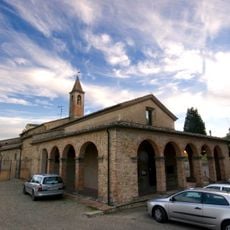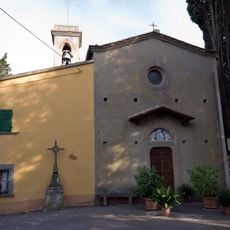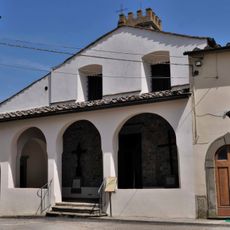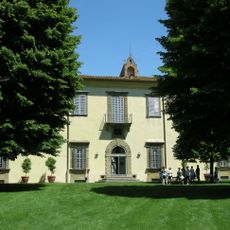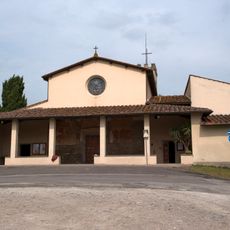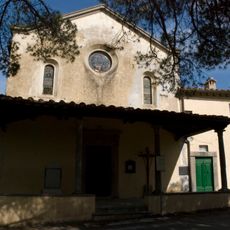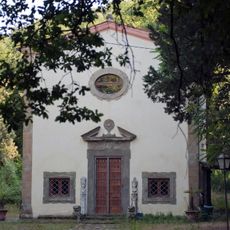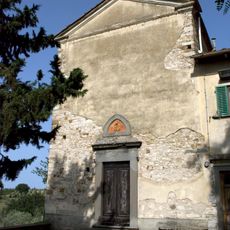
Pieve di San Vincenzo, Romanesque parish church in San Vincenzo a Torri, Scandicci, Italy
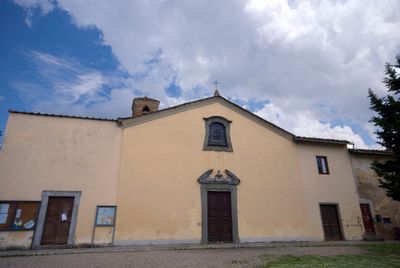
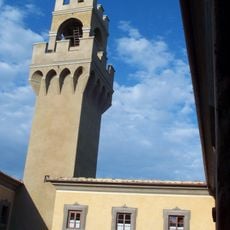
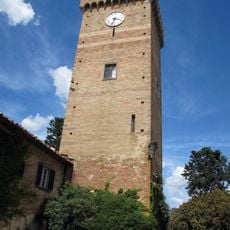
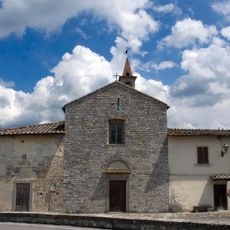
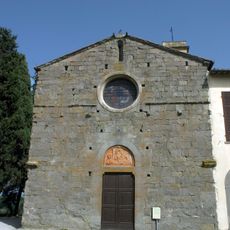
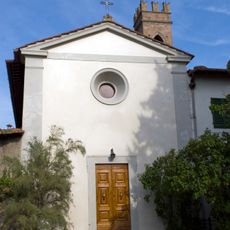
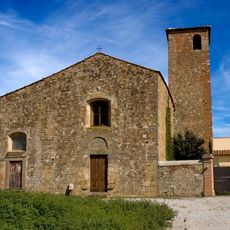
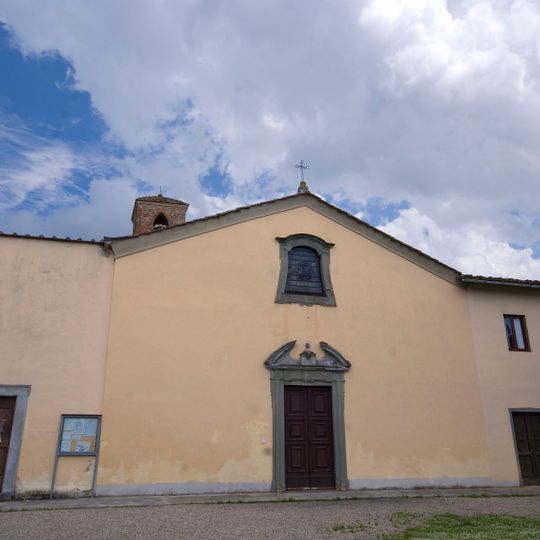
The Pieve di San Vincenzo stands on Via Empolese in the hamlet of San Vincenzo a Torri, Scandicci. Its plastered facade keeps an 18th-century look, with a stone portal dated 1768, a bell-shaped opening and a curved pediment bearing a cherub's head. The square brick-and-stone bell tower adjoins the rear; inside, the wide hall has two side altars of 1745 and 1767.
The pieve is first documented in 1058 as S. Vincentii sitae Pesae and governed ten suffragan churches, though its rector Dino Amati paid only 7 staia of wheat to the Florentine army in 1260. Countess Beatrice signed her will here in 1279, and in 1355 it became the seat of the Lega del comune di Torri. After passing to the Leoni, Palmieri and Bernardini families, it was restored in the 15th century and again between 1745 and 1767; 20th-century work removed neo-Romanesque additions and revealed Romanesque structures in the apse.
The parish is named after Saint Vincent and was recorded in 1058 as S. Vincentii sitae Pesae. A local legend holds that the wooden crucifix now in the apse came from the hermitage of San Zanobi; another says Castruccio Castracani's armour lies buried nearby, watched over by the Moor's head carved on the bell tower.
The church stands on Via Empolese in the hamlet of San Vincenzo a Torri, in the municipality of Scandicci. The bell tower is braced with tie rods inserted after damage in the Second World War, and the baroque high altar was demolished from the apse in the 20th-century restorations. Look for the 1768 stone portal with its bell-shaped opening and cherub head.
A head of a Moor carved on the bell tower is said to watch over the armour of Castruccio Castracani, buried somewhere nearby after his raids of 1325 and 1326. The tower also carries the Leoni family coat of arms on the side facing the hills.
The community of curious travelers
AroundUs brings together thousands of curated places, local tips, and hidden gems, enriched daily by 93,032 contributors worldwide.