Diaccia Botrona Nature Reserve, Nature reserve near Castiglione della Pescaia, Italy.
The Padule di Castiglione is a nature reserve near Castiglione della Pescaia with extensive wetland areas that provide habitat for birds, fish, and plants. The landscape includes shallow water, reed beds, and shorelines that together form a complex natural system.
The reserve preserves part of Lake Prile, a large lake that once covered the Maremma plain and was largely drained by canalisation works begun under the Habsburg-Lorraine rulers in the 18th century, with Peter Leopold of Tuscany starting the works in 1766. The area was designated a Ramsar wetland on 22 May 1991 and established as a nature reserve by the Province of Grosseto through resolution no. 17 of 27 February 1996.
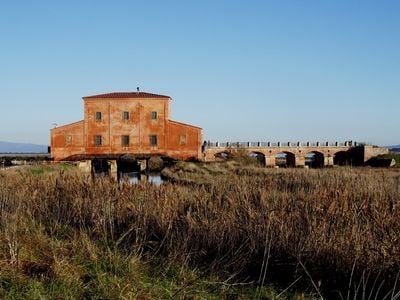
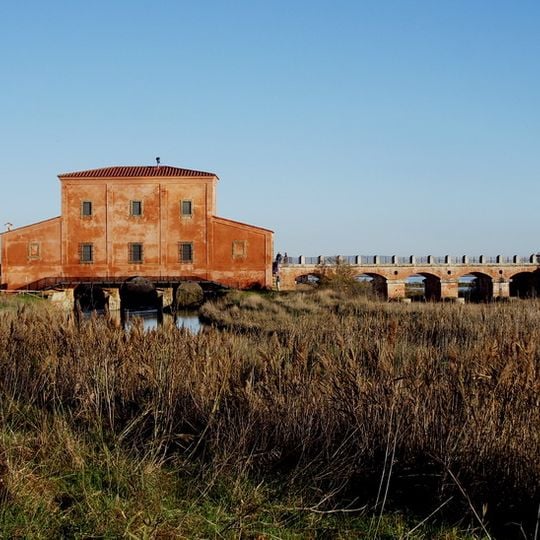
The name joins the two halves of the wetland, the Diaccia and the Botrona. At the western edge stands Casa Rossa Ximenes, built in the 18th century by the Jesuit mathematician Leonardo Ximenes for the reclamation works; it now houses the reserve's visitor centre and multimedia museum on the wetland's flora, fauna and history. On Isola Clodia are the medieval remains of the Abbey of San Pancrazio al Fango.
The reserve lies between the Bruna River and the pine forest along the Castiglione della Pescaia–Marina di Grosseto road, within the municipalities of Grosseto and Castiglione della Pescaia. The visitor centre and multimedia museum are housed in the 18th-century Casa Rossa Ximenes, built by Leonardo Ximenes at the western edge of the Diaccia Botrona. The Bruna side keeps freshwater marsh, while the rest is brackish lagoon.
The reserve is the most important wetland in Tuscany for wintering ducks, and it also supports breeding herons and the Western marsh harrier. Its name comes from its two parts: the Diaccia and Botrona areas.
The community of curious travelers
AroundUs brings together thousands of curated places, local tips, and hidden gems, enriched daily by 92,946 contributors worldwide.