Tomb of Hilarus Fuscus, Ancient Roman tomb near Via Appia Antica in Ardeatino, Italy
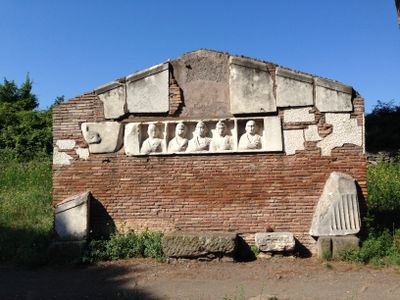
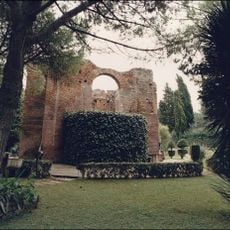
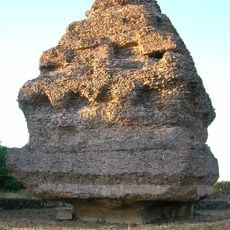
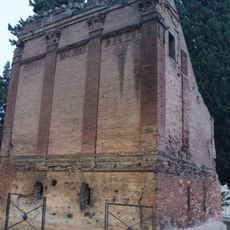
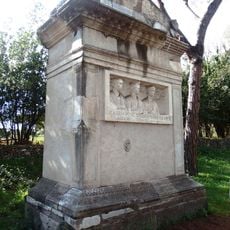
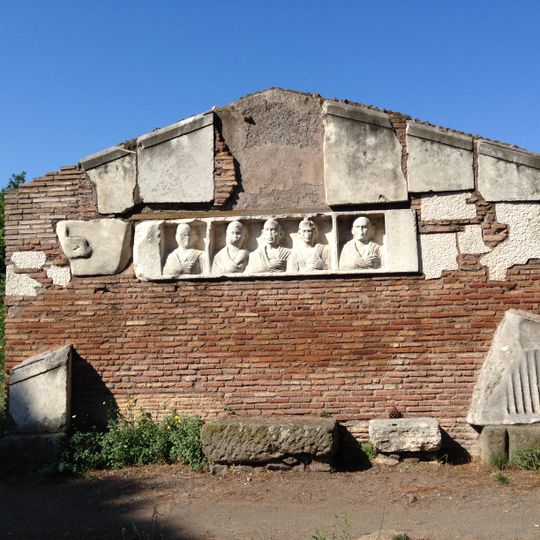
The Tomb of Hilarus Fuscus is a red-brick funerary monument at the fourth mile of the Via Appia Antica, southeast of Rome. Its facade carries a rectangular pale stone frame holding five carved portrait busts in a row, with a broad triangular gable above, its centre lost to damaged masonry. The busts are copies; the originals are in the National Museum of the Baths of Diocletian.
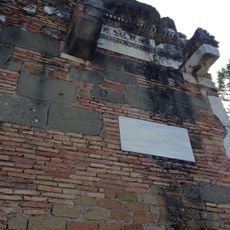
The tomb's architecture and the hairstyles of the women shown in its reliefs date it to about 30 BC, at the end of the Republican period and the start of the Imperial age. Luigi Canina restored the monument in the mid-1800s. An inscription naming those portrayed on the facade disappeared between 1978 and 1998.
The monument displays sculptures that express the social status of the deceased, with original pieces now shown in the National Museum of the Baths of Diocletian. These artworks reveal how Romans valued craftsmanship and personal representation in their burial practices.
The tomb stands at the fourth mile of the Via Appia Antica, southeast of Rome, in the Ardeatino district. The ancient basalt paving is uneven and there is no shelter, so wear sturdy shoes and bring water in summer. The carved busts on the facade are modern copies; the originals are kept in the National Museum of the Baths of Diocletian.
The tomb received mention in Émile Zola's 1896 novel 'Roma', linking it to a major literary work of the period. This literary reference connects the monument to both archaeological heritage and cultural history of the era.
The community of curious travelers
AroundUs brings together thousands of curated places, local tips, and hidden gems, enriched daily by 93,511 contributors worldwide.