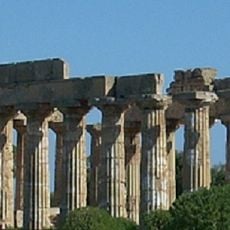
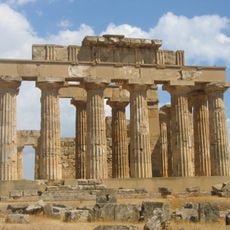
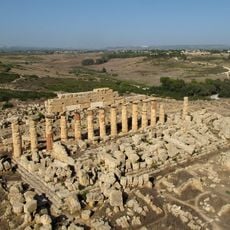
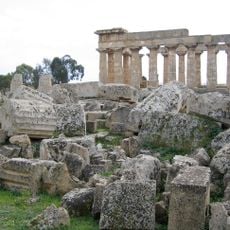
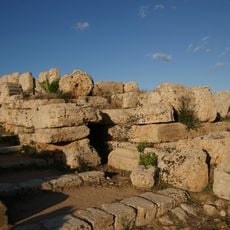
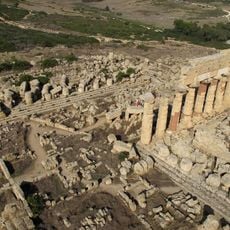
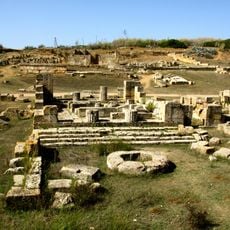
Temple G at Selinunte, Ancient Greek temple ruins in Selinunte Archaeological Park, Italy.
Temple G at Selinunte is a Doric temple begun in the 6th century BC and among the largest ever started in the Greek world. It sits in the eastern sanctuary of Selinunte and was laid out with eight columns across the front and seventeen along each long side.
Work on the temple began around 530 BC but was never finished, as Carthage destroyed Selinunte in 409 BC before construction could be completed. Whatever remained standing was later brought down, most likely by an earthquake over the following centuries.
Temple G was likely dedicated to Apollo, though no definitive proof has ever confirmed this. Visitors walking among the fallen drums and capitals can get a sense of how the building was meant to project power and devotion at the entrance to the city.
The ruins are largely open and can be walked through freely, though the ground is uneven with large fallen stone blocks. Sturdy footwear and sun protection are a good idea, as shade is hard to find across the site.
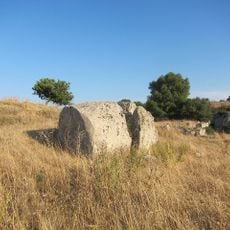
The stone drums cut for this temple can still be seen lying in the Cave di Cusa quarries, left exactly where workers abandoned them more than 2,500 years ago. A visit to that site, a short drive away, shows how a quarrying operation of that scale actually worked.
The community of curious travelers
AroundUs brings together thousands of curated places, local tips, and hidden gems, enriched daily by 90,836 contributors worldwide.