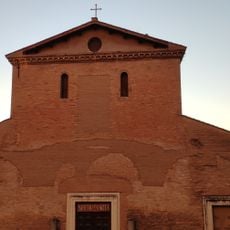
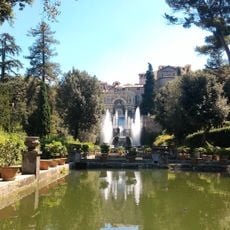
Temple of the Cough, Archaeological site in Tivoli, Italy.
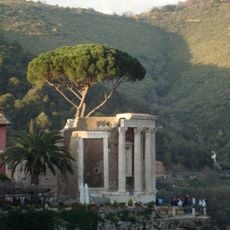
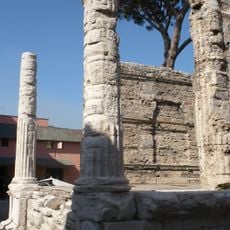
The Temple of the Cough is a circular brick building on the ancient Via Tiburtina at Tivoli, near the Aniene and outside the Porta del Colle. Its dome, over 12 metres across, has an oculus like the Pantheon's. The central body has two levels: the older one held the entrances, the newer one opens onto three rectangular and four semicircular niches. It rests on opus reticulatum remains of a 1st-century BC villa.
Built in the first half of the 4th century under Constantine I on the ruins of a 1st-century BC Roman villa, the structure commemorated works on the Via Tiburtina, as a recovered plaque suggests. In the 10th century it became a church dedicated to the Virgin Mary, restored with material from the nearby Sanctuary of Hercules. It was probably abandoned between the 17th and 18th centuries.
The name "Tosse" likely derives from the gens Tuscia, though medieval tradition held it was a temple to a goddess of coughs built to keep disease away from Tivoli; the sources call this baseless. Inside, early medieval frescoes show a beardless Christ Pantocrator and the Ascension, with Greek-style blessing and Byzantine influence.
The interior cannot be visited: the former church is under restoration and incorporated into a private property. It stands on the ancient Via Tiburtina outside the Porta del Colle, near the Aniene and the lower part of Villa d'Este, so it is reached on foot from the road.
The medieval belief that this was a temple to the goddess of cough, or to the Madonna della Tosse, built outside the walls to keep illness away from Tivoli's people, has no foundation; the name more likely comes from the gens Tuscia.
The community of curious travelers
AroundUs brings together thousands of curated places, local tips, and hidden gems, enriched daily by 93,195 contributors worldwide.