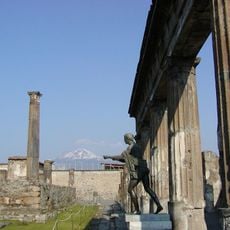
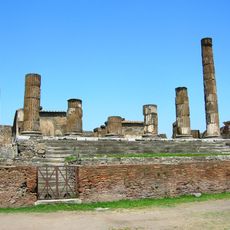
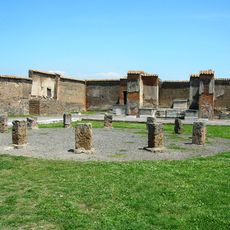
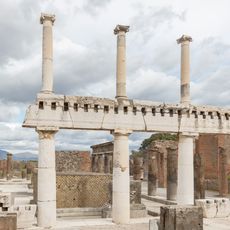
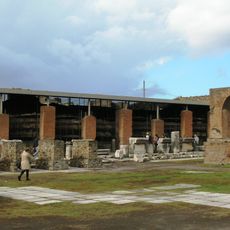
Temple of Vespasian, Roman temple ruins in Pompeii, Italy.
The Temple of Vespasian is a Roman ruin in Pompeii built on an elevated platform reached by stairs from the surrounding plaza. Its interior contains four columns supporting the sanctuary, with remains of an altar where religious ceremonies once took place.
The construction date is uncertain: some archaeologists place it in the Augustan age, later damaged by the earthquake of 62 AD, while others date it after Augustus or even consider it still unfinished at the eruption of 79 AD. If unfinished, it was dedicated to the living emperor Vespasian, as the altar relief of a bull sacrifice suggests; a deceased emperor would have been shown with an ox. It was buried by Vesuvius and later excavated with the Forum under the Bourbons.
The temple was dedicated to the genius of the emperors, and its altar relief shows a priest pouring libations at a tripod, with attendants, a flautist, two lictors and a bull led to sacrifice. The short sides carry a lituus and an incense box under fruit and flower garlands.
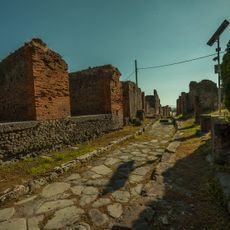
The ruins are located within the excavated area of Pompeii and can be reached by walking through the ancient streets and pathways. Information boards at the site help explain the temple's layout and the purpose of each section.
The altar inside preserves carved relief scenes depicting sacrificial offerings, a detail rarely found so clearly elsewhere. These carvings provide direct visual evidence of Roman religious practices that would otherwise be known only through written sources.
The community of curious travelers
AroundUs brings together thousands of curated places, local tips, and hidden gems, enriched daily by 92,790 contributors worldwide.