Temple of Apollo, Roman temple ruins in Pompeii, Italy
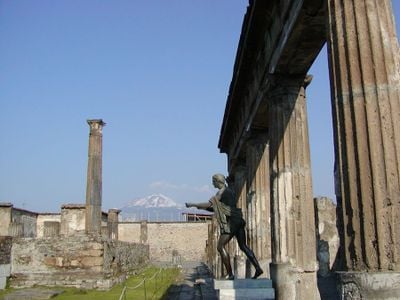
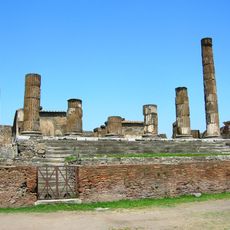
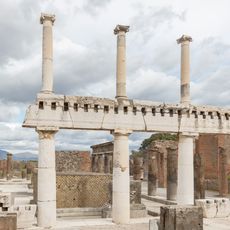
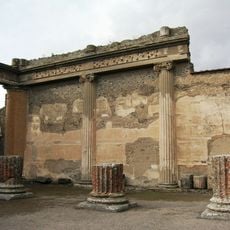
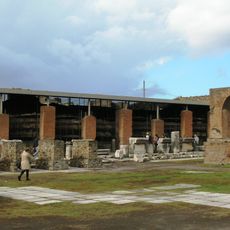
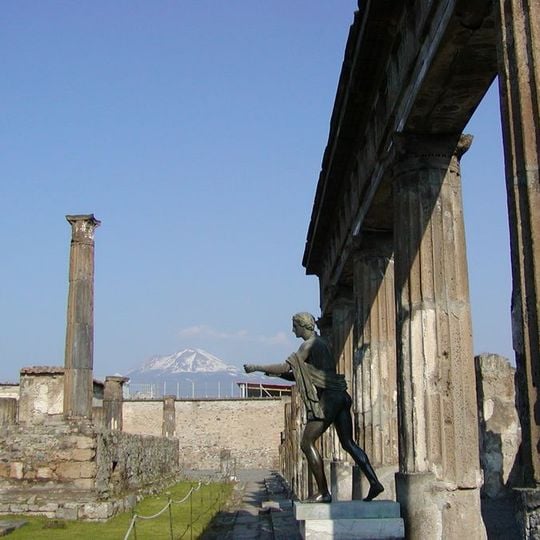
The Temple of Apollo stands in the Forum of Pompeii, its perimeter wall of opus incertum pierced by a single entrance from Via Marina. Inside, a portico of forty-eight fluted tuff columns from Nocera surrounds the sacred enclosure; their Ionic capitals were being replaced with painted Corinthian ones when Vesuvius erupted. At the rear, a staircase climbs the podium to a peripteros of twenty-eight Corinthian columns, with the cella set off-centre toward the sixth column. A white marble altar on a travertine base stands before the steps.
The sanctuary began in the 6th century BC as a Greek worship site and was later remodeled by the Romans after 120 BC. The earthquake of 62 AD damaged the structure heavily, and restoration remained incomplete until the eruption of Vesuvius.
The temple's name comes from Apollo, whose cult was brought from Greece and was already present in Pompeii by the 6th century BC. Games in his honour, the Ludi Apollinari, were held here, though the sources say the reason for them remains uncertain. In the cella stands a block of tuff, the omphalos, the navel-of-the-world symbol venerated at Apollo's sanctuary at Delphi.
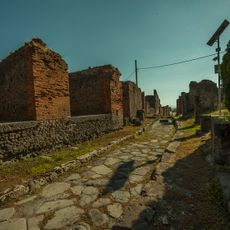
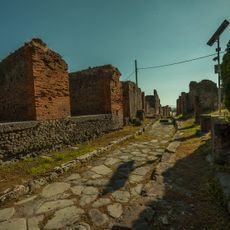
The sanctuary's single entrance opens onto Via Marina, not the Forum side; the other former doorways were walled up and turned into niches. The temple sits at the far end of the courtyard, reached up a flight of steps to the podium, with the white marble altar on a travertine base in front of them.
On the outer wall sits the mensa ponderaria, a stone table with hollows of different sizes that served as official measures for merchants. This control panel shows how the administration prevented fraud and monitored fair trade in the city.
The community of curious travelers
AroundUs brings together thousands of curated places, local tips, and hidden gems, enriched daily by 93,717 contributors worldwide.