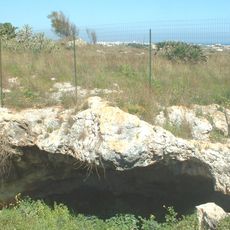
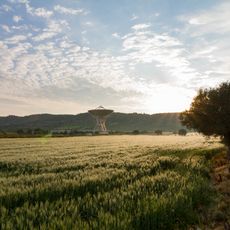
Colonna Pizzuta, Archaeological site in Noto, Italy.
Colonna Pizzuta is a Greek-era monument of the 3rd century BC near ancient Heloros: a column 3.90 metres in diameter rising 10.50 metres on a base of four steps, with a rock-cut burial chamber beneath it. Its pointed top, which gave it the Sicilian name pizzuta, was damaged by the 1693 earthquake.
The monument's origin is uncertain: it may have been erected after Hippocrates of Gela's defeat by Syracuse in the 5th century BC, or to commemorate the victory over the Athenian armies of Demosthenes and Nicias in 413 BC, routed near the Asinaro river. In 1899 Paolo Orsi excavated beneath it and found a rock-cut burial chamber plastered in red and white, with two warriors, one holding a bronze of the age of Hieron II, shifting the dating to the 3rd century BC.
The name Pizzuta comes from the Sicilian word for pointed, describing the sharp tip the column had before the 1693 earthquake damaged it. A marble plaque on the shaft records restoration work ordered by Ferdinand III of Sicily and dated 1795.
The site is open 24 hours daily and within reach of the beach, making it easy to combine archaeological exploration with a coastal visit. The location sits away from main roads, so wear comfortable shoes and prepare for uneven terrain.
The name Pizzuta comes from the Sicilian word pizzuta, meaning pointed, referring to the sharp tip the column originally had before the 1693 earthquake damaged it. The column is 3.90 metres in diameter and rises 10.50 metres on a base of four steps.
The community of curious travelers
AroundUs brings together thousands of curated places, local tips, and hidden gems, enriched daily by 94,320 contributors worldwide.