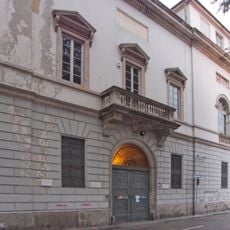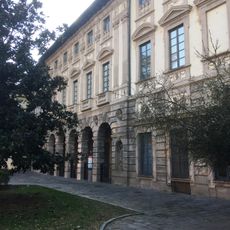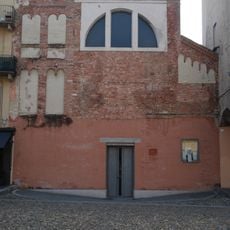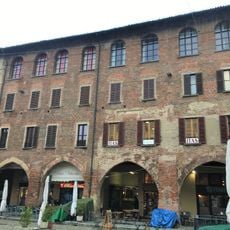
University Library of Pavia, library in Pavia, Italy
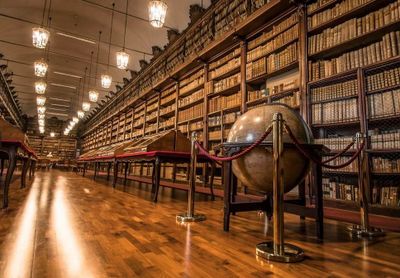
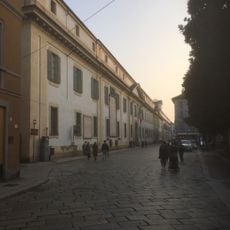
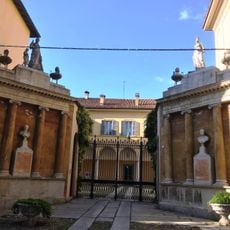
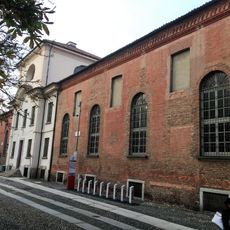
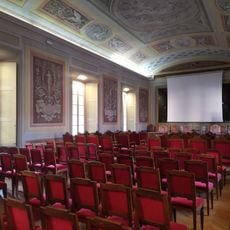
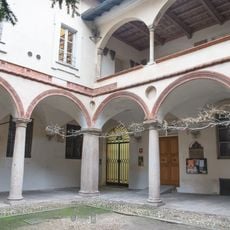
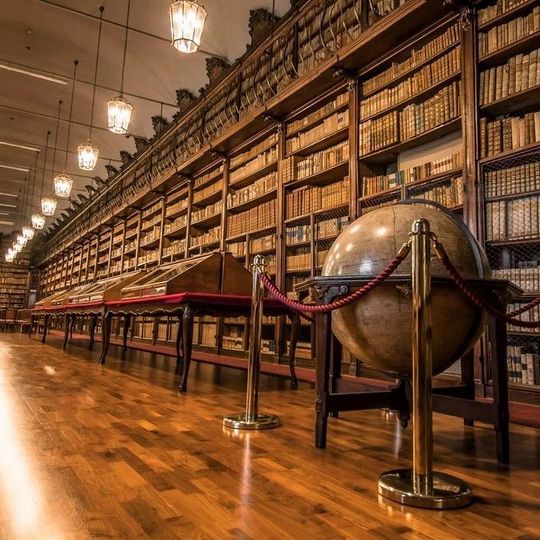
The University Library of Pavia is a public institution in central Pavia serving students and residents. The building houses extensive collections of books, manuscripts, and documents in tall rooms with traditional wooden shelves reaching to the ceiling.
Founded in 1754 as an auxiliary institution of the University of Pavia under Maria Theresa's reform of public education, the library opened to the public in 1772 at the Ghislieri College with about 10,000 volumes. It moved in 1778 to the Teresian Hall in the university's central palace. From 1802 legal deposit brought all publications of the Italian Republic and Kingdom, and in 1820 the collection exceeded 50,000 volumes.
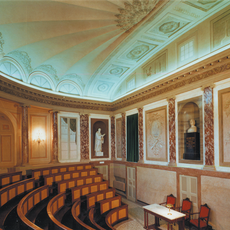
The name "Biblioteca universitaria" survives from its founding role, though faculty libraries now handle much of the university's day-to-day support. In the Teresiano hall, the eighteenth-century shelves are crowned with painted headings naming the classes of knowledge into which the collection was divided at the end of that century.
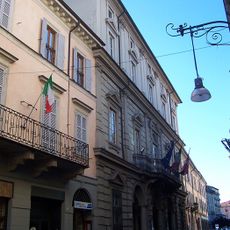
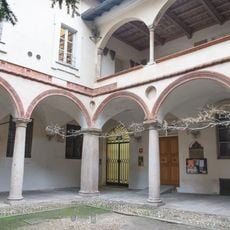
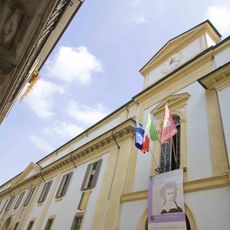
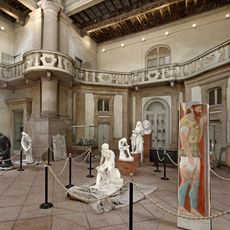
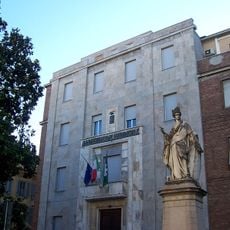
The library occupies rooms off the entrance hall of the university's central palace, reached by the 1822–1823 monumental staircase designed by Giuseppe Marchesi. The Teresiano hall lies to the right of the atrium; the three plainer Austrian-era rooms, including the Bibliografia and Lettura halls, are to the left. Manuscripts, incunabula and rare works are consulted in the separate reserved room.
The reading room holds a marble bust of Giuseppe Frank, a medicine professor from 1785 to 1796 who left his books and a fund for medical works; nearby stands a large globe made by Vincenzo Rosa in 1793.
The community of curious travelers
AroundUs brings together thousands of curated places, local tips, and hidden gems, enriched daily by 94,626 contributors worldwide.